When the Government of India started the Swachh Bharat Mission (SBM) in 2014, it wasn’t just a cleanliness campaign.
Since 2014, we have lots of people clean up through various cleanliness drives, schools making students aware of cleanliness, municipalities making strides in waste management, brands offering eco-friendly alternatives and solutions, etc. The one persistent challenge we all face is plastic!
Single-use plastics are still blocking drains, littered on the streets, and choking our oceans. Not only are single-use plastics harming the environment; they are harmful to humans and animals. This is where compostable bags matter!
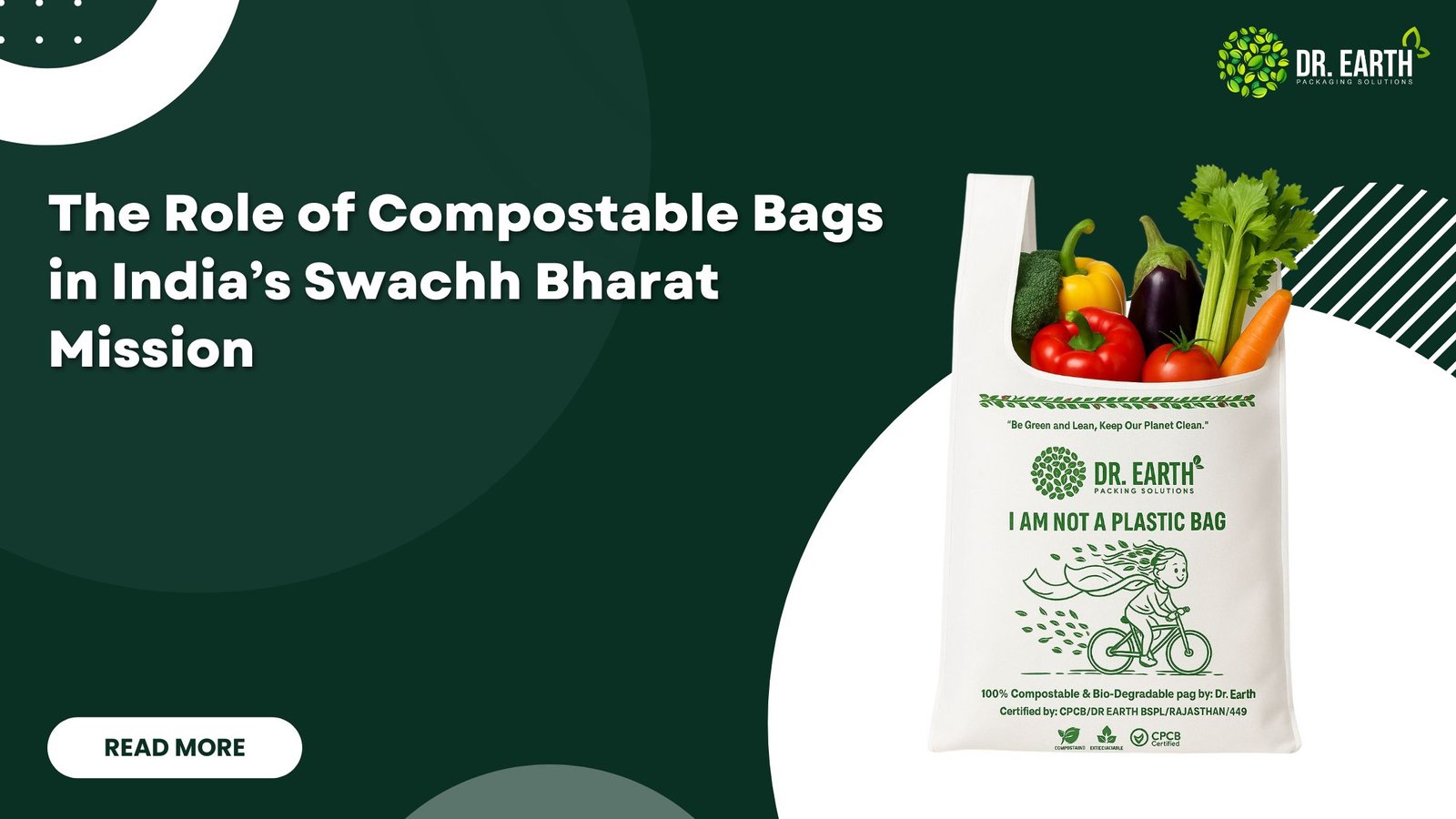
Compostable bags are not just another alternative to plastics, but a valuable sustainable solution in achieving the objectives of Swachh Bharat Mission. Compostable bags aid in reducing non-biodegradable waste, and help in composting at both household and municipal levels, and ultimately get us closer to a cleaner, greener India under the SBM.
In the following blog, we will look at how compostable bags help to achieve the goals of India’s Swachh Bharat Mission, dropping some benefits and challenges.
Understanding Compostable Bags
Before diving deeper into their role in SBM, let’s clarify what compostable bags are.
- Compostable bags are manufactured from natural, renewable sources including cornstarch, potato starch, sugarcane fibers, or PLA (polylactic acid made from plants).
- Compostable bags can be recycled by composter in 90 to 180 days depending on the composting conditions vs conventional plastic bags which take hundreds of years to decompose.
- The byproducts of composting, namely water, carbon dioxide, and nutrient-rich compost, all help nourish the earth instead of polluting it.
Compostable vs. Biodegradable Bags
We have to be clear, don’t mix up these two!
- Biodegradable bags still include petroleum-based plastics and can turn to microplastics.
- Compostable bags will not leave behind any toxic residue and meet strict certification standards.
This makes compostable bags the only truly environmentally friendly option while supporting England’s cleanliness efforts and waste management initiatives.
The Link Between Compostable Bags and Swachh Bharat Mission
The Swachh Bharat Mission has two primary pillars.
- Ending open defecation through toilets and sanitation infrastructure.
- Solid waste management that reduces littering, plastic pollution, and improper disposal methods.
The compostable bag relates to the second pillar because it is a major useful tool for both:
1. Reducing Single-Use Plastic Waste
The Sustainable Biomass Manifesto is all about eliminating single use plastics, or SUPs. We see plastics everywhere; plastic bags are one of the big pollutants as they can be seen on roadsides, landfills and in waterways everywhere.
India can reduce its reliance on plastic bags, plastic garbage bags and plastic wrappers used to package grocery items by moving to compostable carry bags and compostable packaging. The reduction of plastic waste will keep our cities and villages cleaner.
2. Supporting Household Waste Segregation
SBP wants you to segreate waste at source which means as a householder you will segregate wet waste, dry waste, and hazardous waste. Compostable garbage bags have made this much easier:
- You can separate the wet waste like fruit scraps, vegetable scraps and peels, and put them into the compostable bags, and then put those bags directly into the compost.
- Waste segregation is improved, as recyclables will be less contaminated, the collection of municipal waste becomes easy, and it is now compost for agricultural use.
3. Encouraging Composting Practices
The mission promotes innovative and decentralized waste improvement solutions like home composting, community compost pits, and biomethanation plants. The compostable bags are directly relevant:
- The bags get rid of the need to sort waste from plastic garbage bags into composters.
- The bags degrade with their waste while composting, which makes it easier.
4. Reducing Landfill Burden
India produces more than 62 million tonnes of waste per year; almost 70% of which is sent to landfills. There is no doubt that these overflowing landfills represent one of the key problems facing SBM. The adoption of compostable bags for collecting daily waste would facilitate increased availability of organic waste to be composted thus alleviating landfill pressure and supporting a circular economy.
Benefits of Compostable Bags in Swachh Bharat Mission
Let’s review the potential beneficial environmental, social, and economic aspects of compostable bags in the context of SBM.
1. Environmental Benefits
- zero toxic residue – compostable bags can fully breakdown and do not leave behind litter of microplastics that adhere to the soil.
- Lower carbon footprints – compostable bags are made of renewable resources and are designed to reduce reliance on fossil fuels.
- Soil enrichment – The composting that occurs can be utilized for urban gardens, agriculture, landscaping purposes, etc.
2. Social Benefits
- Cleaner public space – reducing plastic litter, immediately improves the standard of living both in urban and rural communities.
- Health benefits – Less plastic waste means less clogging of drains, eliminating conditions for vector borne diseases, and reducing polluted water bodies.
- Awareness & behavioural change – use of compostable bags has the potential to convince citizens to change their behavior/sustainability outside of the program.
3. Economic Benefits
- Job opportunities – Providing compostable bags creates jobs in India where the green economy is unlocked.
- Cost Savings – Municipalities reduce their landfill management costs to the system’s costs by reducing the overall waste produced.
Challenges in Adoption
While compostable bags present unparalleled possibilities, there are challenges to their adoption under SBM:
- Cost: Compostable bags are still costlier than traditional plastic bags, which is less desirable to small vendors.
- Knowledge Gap: Many citizens do not understand the difference between biodegradable and compostable bags.
- Infrastructure: In India, large scale composting is still developing. Without the infrastructure, compostable bags may not degrade effectively.
- Fraudulent Products: Unfortunately, in the market there are many non-compostable plastics labelled as “biodegradable” that confuse citizens and diminish the credibility of non-plastic and genuine compostable products.
Government Support and Regulations
The Indian government, at both national and state levels, has taken major steps to ban single-use plastics and realize alternate products:
- The status of disposable plastics was developed by the Plastic Waste Management (PWM) Rules, 2016.
- The 2022 SUP Ban added to some of the rules existing in PWM to ban many plastic products including carry bags under 75 microns.
- Compostable bags, and other products made out of compostable plastics that carry a certificate issued by the Central Pollution Control Board (CPCB), are an approved alternative to single use plastic under this regulation.
The above regulatory pathway is aligned to the goals of SBM, but more importantly it creates a regulatory space for compostable products.
The Way Forward
To understand the role of compostable bags under SBM, India must follow a holistic solutions pathway:
- Scale Up Production: Individual compostable bags can be made cheaper with government subsidies and incentives.
- Awareness: Educating citizens will be key on certifications and usage.
- Build Infrastructure: Development of composting units properly in the municipal and community context will break down the compost.
- Stringent regulations: Banning of imitation biodegradable plastics will safeguard the compostable bag industry and create standards.
- Public / Private collaboration: Combining government brands and NGO partnerships can place compostable bags in citizens hands more quickly.
Conclusion
The Swachh Bharat Mission has already done amazing things to address cleanliness and sanitation in India. The challenge of plastic waste remains one of the big challenges ahead.
Compostable bags represent a key solution – with support for waste segregation, promoting/using of compost, and significantly taking pressure off landfills, compostable bags are both aligned with mission objectives, but also present an opportunity to create a healthier environment, stronger economy, and more sustainable communities as a whole.
If compostable bags are widespread, they will help India actualise the vision of “Clean India, Green India” — a legacy we would be proud to leave for the generations to come.
FAQs
Q-1. How do compostable bags support the Swachh Bharat Mission?
Ans- Compostable bags reduce plastic waste in the environment, foster household composting, and ease the burden on municipal waste management, which all contribute directly to the solid waste management goals of the Swachh Bharat Mission (SBM).
Q-2. Are compostable bags affordable for everyone?
Ans-At present, they are certainly more expensive than common plastic bags, but government subsidy schemes, and economies of scale through mass production and consumer awareness about the negative effects of plastics on the environment would help to potentially drive down costs.
Q-3. Can compostable bags be used for wet and dry waste?
Ans- Compostable garbage bags are specifically designed for wet waste collection. Carry/bakery/big grocery bags will be preferable for dry waste.
Q-4. What certifications should I look for in compostable bags in India?
Ans- CPCB certified and IS/ISO 17088, to ensure the bags are really compostable.
Q-5. How can individuals contribute to SBM using compostable bags?
Ans- By engaging in compostable bags for daily consumption, supporting proper waste segregation and encouraging others to change to compostable packaging options, anyone can significantly contribute to the overarching goals of Swachh Bharat.