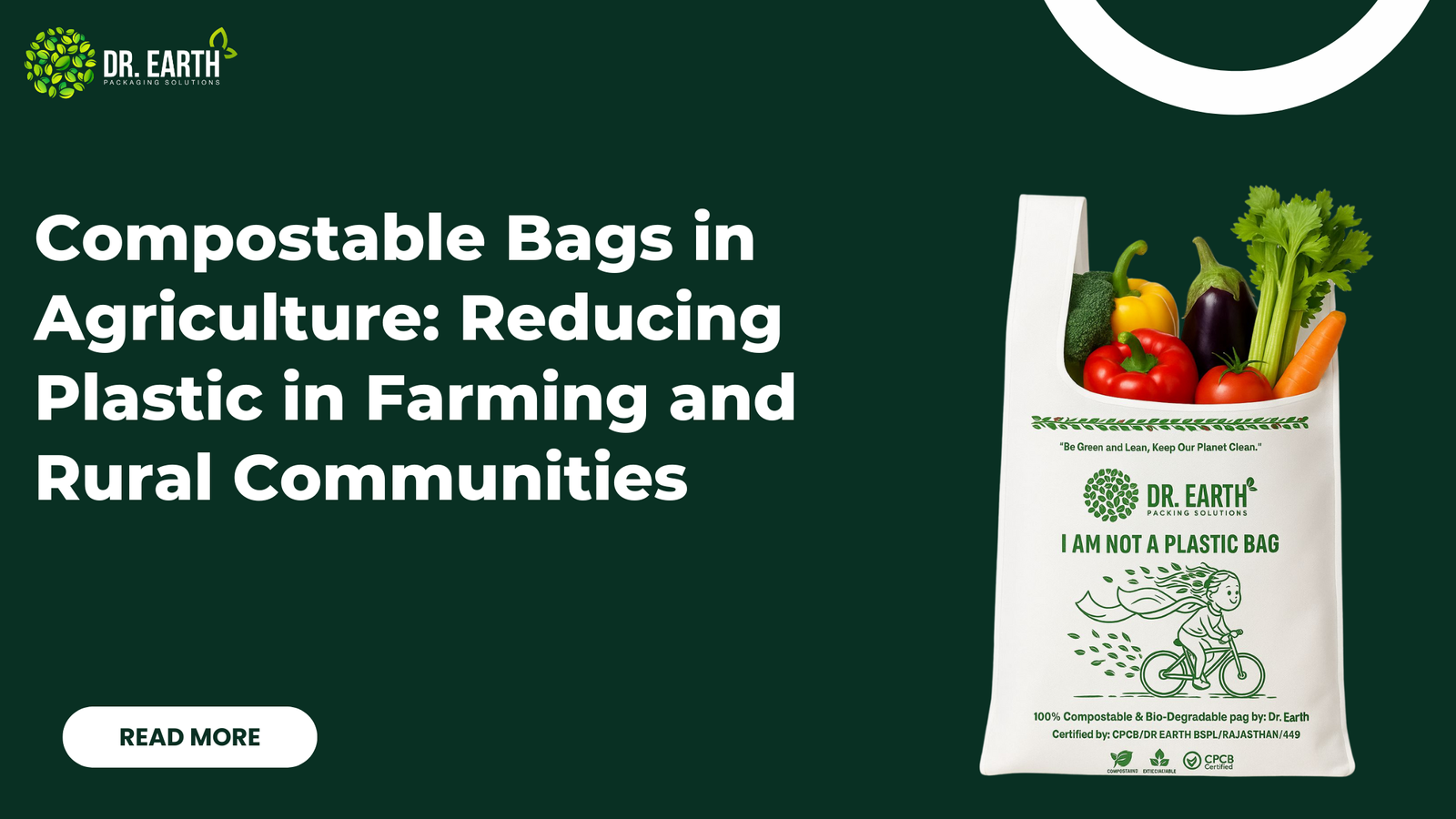
Plastic is now an indispensable aspect of contemporary agriculture — whether it is bags for seeds or fertilizers, or bags to hold harvested produce. However, this convenience creates a significant environmental burden. Across rural India, plastic waste from agricultural inputs and packaging has accumulated, leaching toxins into our soils or obstructing irrigation systems — all of which come from plastic.
Compostable bags are appearing as a sustainable and scalable alternative solution to plastic waste. These plant-based bags demonstrate the same utility as plastic, however, they biodegrade and leave no harmful residue. When incorporated into agricultural systems, compostable bags can enable the creation of a cleaner, more circular rural economy, for both farmers and the environment.
This blog will describe how compostable bags are changing agriculture, their environmental and economic benefits, challenges in implementation, and the next steps to give compostable bags a chance to be a rural sustainability success story.
The Problem: Plastic Pollution in Agriculture
Plastic – or agri-plastics – has become an characteristic component of modern agriculture, deemed essential for mulching, irrigation, storage of crops, and packaging. Plastic products are lightweight, strong, and cost-effective; nonetheless, agri-plastics have created an enormous pollution problem in agricultural landscapes.
1. Soil Contamination
The plastic remnants of torn mulch films, fertilizer wrappings and seed coverings are put into the soil. Over the years, these microplastics may reduce soil fertility, alter the microbial community and decrease water penetration of soil that, when combined with other factors, reduce crop yields.
2. Water Pollution
Poor management of agricultural plastic waste usually leads to its run off into rivers, ponds and ground water. When plastic decomposes itself into micro-particles, they will be transported into agricultural water sources, and eventually be added into the food chain.
3. Livestock Hazards
When foraging, stray animals in rural areas tend to eat discarded packaging film. This usually results in obstruction in their intestinal passage which makes them fall sick or die and this is problematic to both animal health and human health.
4. Burning of Plastic Waste
In the absence of mechanisms that properly discard the plastic waste, farmers opt to burn plastics in the open fields, releasing toxic dioxin and furan gases to the atmosphere, degrading the quality of the air and our ozone layer, and harmful to the human beings.
5. Lack of Recycling Infrastructure
Majority of the plastic waste produced in agriculture that includes film or containers cannot be recycled due to remnants or cross-contamination.
Although plastics have introduced efficiency in agriculture it has left us with an environmental crisis in our hands that needs to be resolved using sustainable means.
Compostable Bags: A Sustainable Agricultural Revolution
Plant-based materials such as cornstarch, PLA (Polylactic Acid), and PBAT (Polybutylene Adipate Terephthalate) are used to make compostable bags that will transform the agricultural practices in a sustainable manner.
In contrast to plastic that is commonly utilised with a notion that they will dissolve, compostable bags can be broken down into water, carbon dioxide and organic biomass within several months, and no amount of toxic by-products will be left to be washed in to the soil or the drinking water. They are also certified by CPCB and comply with the international standards of compostability, which certifies them as being safe to soil and crops.
Key Features of Compostable Bags for Agriculture
- Produced using renewable sources such as corn, potato starch or sugarcane.
- Fully biodegradable and compostable, in 3-6 months in proper composting conditions.
- Water resistant to carry fertilizers, seeds, and produce safely.
- Safe for soil as they leave no toxic residues or microplastics behind, as do plastics.
- Multi-use for all on and off-field agricultural applications.
Compostable bags can effectively replace plastic at many points during the agricultural cycle.
Applications of Compostable Bags in Agriculture
1. Seed and Fertilizer Packaging
Compostable bags can substitute conventional plastic packaging for seeds, fertilizers, and pesticides. After the bags are emptied, farmers can bring them to composting pits, utilizing what would be waste and converting it into soil nutrients.
2. Produce Storage and Transport
From grains and pulses to vegetables and fruits, compostable carry bags can be used by farmers to more sustainably transport their products to market without plastic waste. Once the product is sold, it can either be put into a composting system on-site or be collected for composting at a designated collection point.
3. Mulching and Soil Covering
Innovative compostable films can replace polyethylene mulch, and instead of removing the film after the harvest year, it breaks down in nature. This saves farmers both time and money, as removing plastic mulch can be labor-intensive and costly.
4. Nursery and Sapling Bags
Compostable seedling grow bags can be directly planted into the soil, since they break down in nature. Unlike solid plastic planting bags that disrupt soil ecology, this method reduces transplant shock while avoiding plastic waste.
5. Waste Collection on Farms
Any residual farm waste, such as crop debris or damaged items, can also be placed in compostable garbage bags to help regulate waste for organic composting practices. This encourages a cleaner farm and nutrient recycling and builds an awareness of waste practices in farmers or consumers alike.
By considering compostable bags for their uses in farming, agriculture can take a significant step toward sustainability.
Environmental Benefits of Compostable Bags in Farming
1. Improved Soil Health
Since compostable bags break down to organic matter, they supply soil with carbon and nutrients. This enhances the fertility of soil and microbial population which crops require to grow healthy and strong.
2. Reduced Plastic Waste
Compostable bags and mulch can be used as alternatives to plastic, significantly reducing plastic waste accumulation in rural areas — less plastic in landfills and fewer open fires in the countryside.
3. Support for Circular Agriculture
The compost that is made out of decomposed compostable bags is organic thus replenishing back to the farms thus completing the cycle to know what composting is and what benefits it can bring to the health of the soil and the animals.
4. Lower Carbon Footprint
Compostable material will slow down the use of fossil fuels in manufacturing, as they are manufactured of biodegradable material, and their degradation produces less green house gas, therefore leading to a general decrease in the number of plastics manufactured of fossil fuel.
5. Protection for Livestock and Wildlife
Compostable substances decompose naturally and safely i.e. they will not harm the animals or the environment hence making rural environment cleaner and safer.
Economic and Social Impact on Rural Communities
Compostable bags not only have environmental advantages but support rural livelihoods as well.
1. Boost to Local Manufacturing
With the demand for compostable products, local manufacturing units can develop in rural and semi-rural areas, creating jobs.
2. Reduced Waste Management Costs
Expenses related to waste management may be eliminated by directly converting compostable packaging into compost without the costly collection and landfill service.
3. Empowering Farmers
Farmers can become members of India’s green revolution by adopting eco-practices, which will appeal to consumers and buyers interested in eco.
4. Government Incentives
Using compostable materials may allow farmers and cooperatives to apply for several sustainability-related schemes and carbon credits, which fall under India’s Swachh Bharat or Smart Village programs.
5. Healthier Communities
Less pollution, cleaner air, and clean soils will result in healthier living conditions and improved health disparities in rural India.
Challenges and the Road Ahead
Although compostable bags offer a viable alternative, various challenges still remain:
1. Higher Costs
Currently, compostable bags cost more than traditional plastic bags. However, with increased production and a focus on governmental policies promoting eco-materials, prices will inevitably drop.
Solution: Work together with surrounding farms or local farmers’ groups to bulk buy at a decreased cost per unit.
2. Limited Awareness
Many farmers aren’t aware they have this option and aren’t quite sure how to use and/or dispose of properly after.
Solution: Conduct campaigns through NGOs, Krishi Vigyan Kendras (KVKs), and rural initiatives to raise awareness and understanding.
3. Composting Infrastructure
In rural settings; actually creating an organized and refined composting process will be difficult.
Solution: Support more decentralized composting in rural locales – either in village community compost pits, bio-digesters, or composting systems directly on the farm.
4. Supply Chain Integration
Moving to compostable packaging means a shift in the supply chain working together in tandem from manufacturers, suppliers and ultimately the end user of the agricultural product.
Solution: Encourage conversations amongst government bodies, manufacturers of compostable bags (i.e. Dr Earth), and cooperative farmer groups.
5. Certification and Quality Assurance
Farmers must feel assured that the bags they purchase are, in fact, CPCB (Central Pollution Control Board) certified bags that show they truly are compostable.
Solution: Continue to influence purchasing decisions from reputable suppliers and increase public awareness.
The Role of Dr. Earth in Sustainable Agriculture
Dr. Earth is a leading promoter of biodegradable and compostable packaging in India, and its compostable bags are helping farmers and businesses create an alternative to plastic based on innovation and environmental responsibility.
Why Choose Dr. Earth Compostable Bags for Agriculture?
- CPCB approved and 100% compostable
- Made from renewable plant-based materials
- Durable, leak-proof, and weather-resistant
- Safe for food, soil, and compost
- For agricultural, commercial, and household uses
Dr. Earth’s compostable garbage, grocery, and carrying bags are enabling India’s farmer and rural populations to adopt a sustainable waste system that works for people, animals, and the planet.
The Future of Compostable Bags in Indian Agriculture
The use of compostable products in agriculture has just begun. With the support from the government, advances in technology, and community buy-in, the possibility for creating a substantial impact in the future is on the horizon.
Key future trends:
- Adoption of compostable materials into government-led supported farming initiatives.
- Research on composting mulch films and agri-plastics that are climate appropriate in India.
- Partnerships between agribusiness and agri-cooperatives.
- Digital platforms for sustainable sourcing that may be used in rural settings.
- Collection of compostable waste used as organic fertilizer on local farms.
As the India government presses to achieve its vision for “Zero Plastic ” and circular economy goals, compostable technology will serve as a central element in agriculture and rural sustainability efforts.
Conclusion
Plastic has served a role in agriculture, but at great environmental cost. Compostable bags are not simply a substitute, they are a revolution – assisting farmers and protect the health of soil, air, water, and community health while doing so.
We can create a future in rural India and embrace compostable bags in rural India to:
- Reduce plastic pollution
- Restore soil fertility
- Lower waste management costs
- Improve public health
- Strengthen the circular rural economy
For a nation striving for self-reliant, sustainably productive farming, compostable packaging is a small step, with the potential for great environmental change.
And with innovators like Dr. Earth, changes can happen today!
FAQs on Compostable Bags in Agriculture
Q1. What are compostable bags made of?
Ans- Compostable bags are made from renewable plant-based materials such as cornstarch, sugarcane, and PLA that decompose naturally.
Q2. Can compostable bags be used for fertilizer and seed packaging?
Yes, compostable bags are strong and durable enough for storing and transporting fertilizers, seeds, and other farm inputs.
Q3. How long does it take for compostable bags to decompose?
Ans- Under suitable composting conditions, these bags decompose within 3–6 months into natural biomass and carbon dioxide.
Q4. Are compostable bags safe for soil and crops?
Ans- Absolutely. Unlike plastics, compostable materials break down into organic matter that enriches soil health instead of contaminating it.
Q5. How can farmers in India adopt compostable solutions affordably?
Ans- Farmers can collaborate with cooperatives, purchase in bulk, or partner with suppliers like Dr. Earth that provide certified, cost-effective compostable packaging solutions.
Share:
Related Posts

Send Us A Message
Related Posts