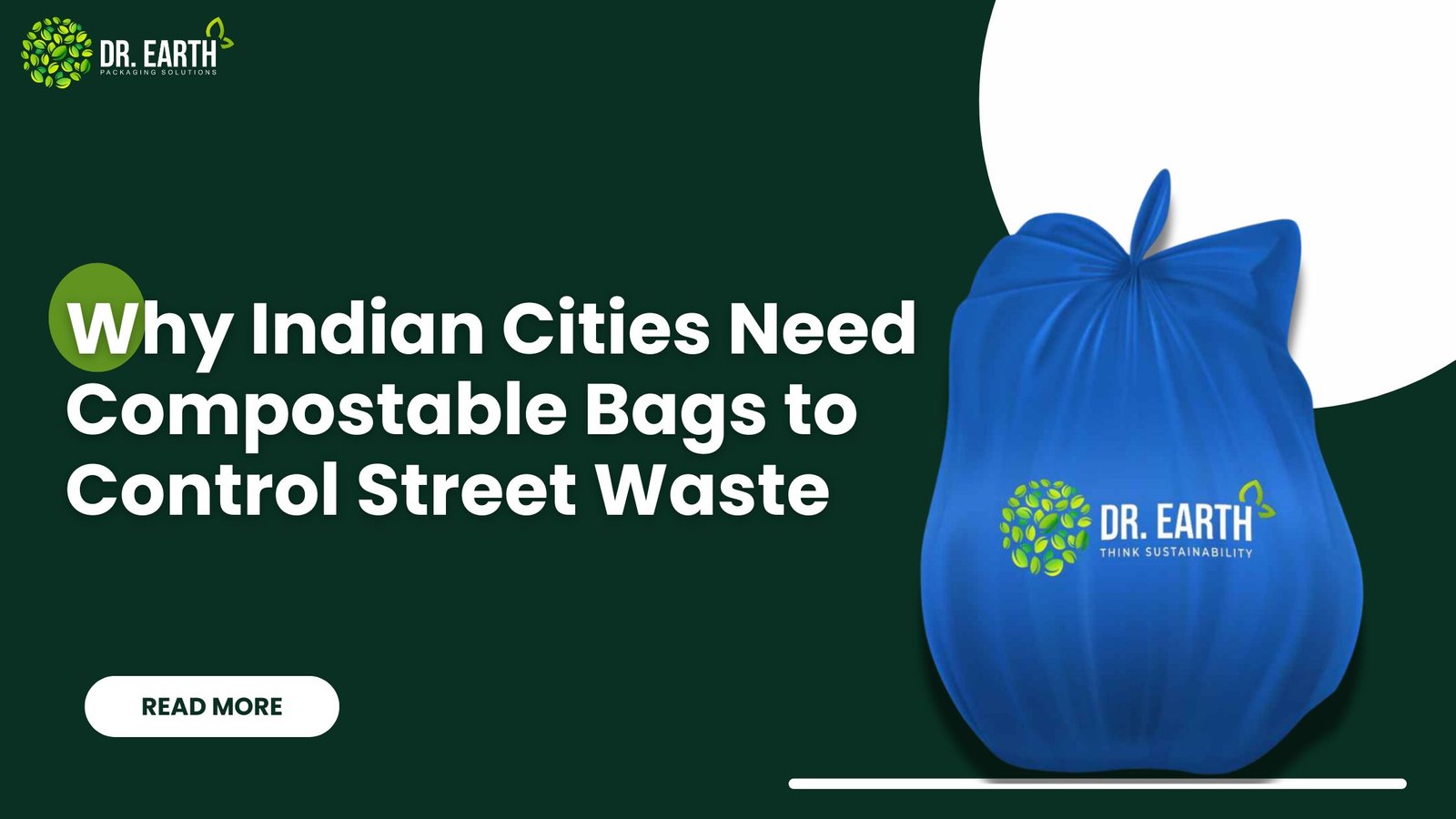
The most evident form of pollution in urban India is street waste, which has recently reached crisis levels as evidenced by overflowing garbage bins, bags of plastic littering the sidewalks, blocked gutters, and heaps of trash near marketplaces. Though rapid population growth and urban development contribute significantly to the street waste problem, there are other factors that contribute to the significant amount of waste generated and discarded in our cities. These include how we collect, store, and dispose of waste, specifically through the use of plastic garbage bags.
Plastic garbage bags, as well as plastic bags used for carrying groceries, contribute greatly to the increase in street waste. Plastic bags never decompose; they blow away easily in the wind or get washed away during floods and heavy rains. Even after being thrown away, plastic bags will remain in our environment for many years. Because of this, as urban areas work to develop real solutions for improving cleanliness and waste disposal, compostable bags can be an important component of a comprehensive street waste management plan.
The Street Waste Crisis in Indian Cities
Street waste is a significant issue for Indian cities due to the enormous amount of waste generated on a daily basis. Organic and packaging waste is produced in large quantities by food vendors, markets, and offices throughout urban areas with little or no containment, allowing large amounts of waste to quickly spread throughout public areas and eventually create unsightly patches of waste along streets and sidewalks.
Some common examples of waste generated in the streets include:
- Litter from plastic bags found on roads and sidewalks
- Waste bins filled with waste and damaged plastic lining
- Blocked drainages due to plastic bags that are blown away by wind
- Spread of waste due to animals opening waste bags
Waste on roads can create health issues for society and also create safety issues for city sanitation and drainage maintenance workers as well as create potential for health and hygiene risks from windborne and contaminated street waste or Class A hazardous materials.
Why Plastic Bags Make Street Waste Worse
The issue with the use of the plastic bag for street waste management is because of the fact that the plastic bag was designed with convenience in mind, while the use of plastic bags in urban areas creates a major inconvenience when dealing with street waste. The following are reasons for this:
- Plastic bags can easily tear when filled with liquid waste or to heavy for them to carry.
- Plastic bags are easily blown away when the wind is blowing.
- Plastic bags do not break down naturally when left on a road or open land.
- Plastic bags can accumulate in the drainage system causing blockages leading to flooding and other flooding related property damage.
- Plastic bags will break down into microplastics when exposed to sunlight and heat.
Once plastic bags are in the street, they are practically impossible to retrieve, and they can spread waste over a larger area and take a long time to decompose after their contents have already decomposed.
How Compostable Bags Help Control Street Waste
In terms of waste containment, compostable bags fundamentally differ from regular garbage bags. They are made to decompose naturally when composted. Because of this ability to break down, they will not trap organic waste forever, but rather will act in conjunction with it.
Their role in controlling street waste is both direct and indirect.
Better Containment of Wet Waste
The majority of street waste in Indian metro areas is created by the disposal of foods that have been thrown away or composted. The majority of compostable bags will hold all organic materials without the risk of spills happening due to leaking or rips.
This reduces:
- Spillage from bins
- Odour buildup on streets
- Attraction of animals and pests
Reduced Long-Term Litter
When compostable bags accidentally make their way onto the street, unlike plastic, they will not take months or decades to decompose. As they break down over time, they will revert to their natural state, eliminating the risk of litter accumulating in public areas.
The gradual combination of the waste found in the street with other types of waste in public areas will help cities achieve the ultimate goal of reducing these areas of waste.
Improving Waste Segregation at Street Level
In India, the severe state of waste management is primarily attributed to the lack of proper segregation at the source of waste. This has prevented municipal workers from separating recyclable materials from organic waste.
Through the use of compostable bags, you can clearly identify the organic waste that is supposed to be collected.
- Clearly signalling organic waste collection
- Making it easier for waste collectors to identify wet waste
- Preventing plastic contamination in composting streams
The adoption of compostable bags in locations such as markets, street food stalls, and residential areas within urban areas greatly enhances the collection and sorting of waste through these locations.
Preventing Drain Blockages and Urban Flooding
In India, plastic bags due to clogging of drainage systems create a significant cause of drain blockages and urban flooding during the rainy season due to their accumulation in storm drains.
Compostable bags reduce this risk because:
- The decomposition of compostable bags over time limiting the extent to which they accumulate
- The formation of long-term blockages due to compostable bags
- The cumulative load of plastic bags on drainage systems
Cleaner drainage systems lead to less standing water, therefore reducing the incidence of disease transmission and creating cooler street surfaces during the hot summer months.
Health and Hygiene Benefits for Urban Communities
Public health is influenced by the direct effects of rubbish on the street. Rubbish that has been trapped in plastic bags decays and releases strong odours as well as toxic gases. The open rubbish attracts flies, rats and feral animals.
By permitting natural decomposition of food waste and reducing volume of plastics, compostable bags will contribute to:
- Cleaner Streets
- Lower Exposure to Pathogens
- Safer Treatment Conditions for Sanitation Workers
- Lower Risk of Vectors
The importance of these benefits for cities with high population densities cannot be overemphasized.
The Role of Compostable Bags in Municipal Cleanliness Drives
In order for Government Initiatives such as the Swachh Bharat Mission to succeed in promoting visible cleanliness to the public they must also address the types of materials that are utilised for collecting and disposing of these wastes. If not, the benefits of addressing visible cleanliness will be extremely short-lived. Compostable Products assist in long-term solutions for:
- Decentralised Composting
- Decreasing Land Fill Dependency
- Increasing Waste Handling Efficiency
- Increasing Public Participation & Responsibility in Waste Segregation
Cities that have implemented compostable solutions in conjunction with behavioural changes are experiencing longer-lasting improvements in cleanliness.
Dr. Earth’s Role in Supporting Cleaner Indian Cities
Dr. Earth manufactures compostable bags that help to solve the problems of street waste at the source. The company manufactures certified compostable bags specifically for Indian waste conditions. In addition, Dr. Earth’s compostable bags are designed to hold wet waste and decompose naturally during the composting process.
Dr. Earth focuses on producing certified compostable bags that are designed specifically for Indian waste conditions. These bags are developed to handle wet waste effectively while breaking down naturally during composting.
How Dr. Earth Supports Urban Waste Management
Dr. Earth’s compostable bags provide cities with the following benefits:
- The ability to collect wet waste in a sanitary manner.
- A significant reduction in the amount of plastics that contaminate the composting system.
- The ability to segregate waste at the household and business levels.
- Compliance with India’s Plastic Waste Management Rules.
Dr. Earth manufactures compostable bags that meet the standards of environmental responsibility, which enables the development of waste management systems that are practical, scalable, and compliant with the evolving regulations concerning waste management.
Rather than viewing waste as something to be concealed or disposed of, Dr. Earth encourages cities to view organic waste as a resource to be returned to the earth safely.
Challenges That Still Need to Be Addressed
Compostable bags provide many advantages; however, these advantages are influenced by various supporting systems that exist within each community.
- Lack of access to compostable infrastructure in many cities.
- Limited knowledge of how to dispose of them correctly.
- Confusion over compostable vs. biodegradable products.
- The cost sensitivity of consumers and small vendors.
Each of these obstacles speaks to the need for increased consumer education and labeling, as well as more collaborative efforts by all stakeholders including manufacturers, municipalities, and the general public.
The Future of Cleaner Streets in Indian Cities
The answer for cleaner Urban Areas cannot be solved simply by collecting garbage. The materials that are used do matter! There are ways for the Indian people to create a more sustainable society, through initiatives like the use of compostable bags, which represent an immediate opportunity for improvement in Waste Segregation, Cleaner Streets, and a Healthier Urban Environment.
Compostable bags should become a staple within the Urban Waste Disposal Management Systems of the future, once we develop a strong Compost Infrastructure within our Cities, and provide better education about these products.
Conclusion
The issue surrounding street pollution is a symptom of a larger issue regarding how Cities Manage Waste Material. The presence of an abundance of plastic bags has contributed greatly to worsening this situation, but plastic bags are certainly not the only product that is causing this issue.
The introduction of compostable products will provide Indian Cities with a realistic option to help manage street pollution while encouraging Composting and Sustainable Development practices. In partnership with responsible producers like Dr. Earth, Municipalities will be able to move toward Cleaner Streets.
FAQs
Q-1. How are compostable bags different from plastic bags used for street waste?
Ans- Compostable bags are made from plant-based materials and are designed to break down naturally during composting, whereas plastic bags persist in the environment for decades. Unlike plastic, compostable bags do not contribute to long-term litter, microplastic pollution, or drainage blockages.
Q-2. Can compostable bags handle wet waste from street vendors and markets?
Ans- Yes. High-quality compostable bags, such as those manufactured by Dr. Earth, are designed to handle wet and organic waste common in Indian streets, markets, and food stalls without leaking or tearing under normal usage conditions.
Q-3. Do compostable bags help reduce urban flooding in Indian cities?
Ans- Compostable bags help lower the risk of urban flooding by reducing plastic accumulation in storm drains. Since they break down naturally over time, they are less likely to cause persistent blockages compared to plastic bags.
Q-4. Are compostable bags compliant with India’s Plastic Waste Management Rules?
Ans- Certified compostable bags that meet government standards are compliant with India’s Plastic Waste Management Rules. Dr. Earth’s compostable bags are manufactured to align with these regulations, making them suitable for households, businesses, and municipal use.
Q-5. What role can citizens and local businesses play in reducing street waste using compostable bags?
Ans- Citizens and businesses can support cleaner streets by using compostable bags for wet waste, segregating organic waste at the source, and disposing of it responsibly. Collective adoption at homes, markets, and commercial spaces significantly improves urban cleanliness and waste management efficiency.
Share:
Related Posts
Send Us A Message
Related Posts