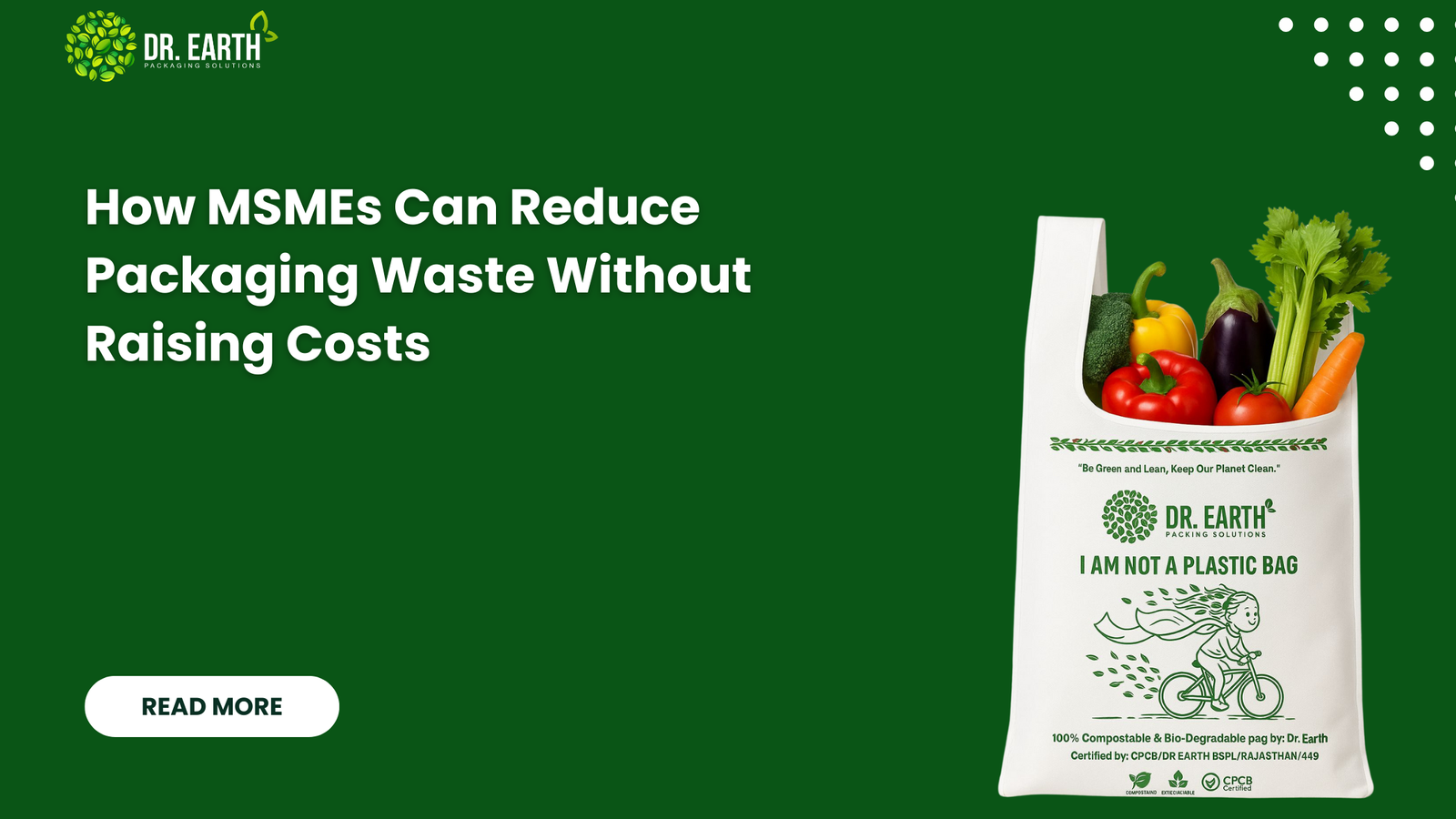
How MSMEs Can Reduce Packaging Waste Without Raising Costs
The need to reduce packaging waste has transitioned from “nice to do” in today’s highly competitive marketplace to something that is expected by consumers, who are increasingly making their purchase decisions (at least partly) based on a brand’s commitment to sustainability, and by regulations that continue to place more restrictions on single-use plastic products and waste disposal. MSMEs (Micro, Small and Medium Enterprises) in India are confronted by these challenges, as well as the opportunities these regulatory changes present.
Due to the limited resources of small businesses as compared with larger organizations, reducing packaging waste while simultaneously not increasing expenses can seem to be an almost impossible task. However, through thoughtful planning and smarter material options, the ability to be sustainable and exercise control over costs can coexist. This is not just “eco-friendly” rhetoric; reducing packaging waste can provide MSMEs with actual savings, increased customer loyalty and enhanced position in the marketplace.
Through this blog post, we will explore tangible solutions for Indian MSMEs to reduce packaging waste cost-efficiently. We will also introduce an innovative product offered by Dr. Earth, a manufacturer of biodegradable compostable bags, that plays an important role in promoting a zero waste policy.
Why Packaging Waste Matters for MSMEs
Packaging waste is an environmental problem in addition to being a business problem. Packaging wastes and harms the environment can damage a brand’s image and credibility. Poorly packaged products also generate additional waste streams that place a burden on local government waste management systems and lead to additional pollution.
For MSMEs, the impact of packaging waste can manifest itself in several ways:
- Higher disposal costs for waste – more waste means more collection and disposal fees for businesses that use waste in their manufacturing process.
- Increased exposure to regulations – As a result of India’s Plastic Waste Management Rules and state-level single-use plastic bans, non-compliant packaging could result in fines or other penalties.
- Customer perception – Many consumers are focused on sustainability, and brands that demonstrate sustainable packaging practices tend to foster deeper loyalty and positive word-of-mouth marketing.
Given all of these aspects, the reduction of Packaging Waste represents not only an environmental obligation but an economic opportunity.
Strategy 1: Understand and Audit Your Packaging Waste
To effectively address packaging waste, MSMEs must first understand their current packaging footprint. By completing a packaging waste assessment, MSMEs gain insight into their packaging material sources, the most widely consumed packaging types, and opportunities for further reduction of waste generated through packaging.
A waste audit can include:
- Measuring the volume of a variety of types of packaging (plastic, cardboard, paper, bubble wrap, etc.)
- Collecting information about specific types of materials used
- Identifying packaging that often ends up unused or discarded before use
- Evaluating the costs associated with each packaging component
The audit can be completed without expert tools – even an informal week-long tracking by workers can provide critical insight into one’s waste streams. With this knowledge, it will be easier to identify and choose the best course of action for waste minimization.
Strategy 2: Right-Size Packaging
One of the easiest ways to minimize both waste and cost when packaging products is to minimize unnecessary packaging. Too often, small and medium-sized enterprises create oversized packaging with generic-sized boxes “just in case.” However, if the contents of a box do not require the additional space, it will create large amounts of unnecessary waste and increased expense.
Consider the following practices:
- Use standardized optimal box size: There should be a “match” between the product size and the box size, to avoid the need for excess filler.
- Remove unused packaging: If a product is being sent without the use of the internal air pillows or the extra film, do not include them.
- Use flexible packaging solutions: The use of flexible packaging designs capable of adapting to variable size(s) of products, means the need for multiple SKUs of packaging is eliminated.
When the size and volume of your packaging materials are reduced, the cost of materials decreases and there is less chance of the packaging being damaged in transit; a win-win for both the business and the customer.
Strategy 3: Replace Single-Use Plastics with Sustainable Alternatives
Although single-use plastics are inexpensive, they also create significant damage to our environment because of their longevity and increasing regulation. Therefore, small and medium-sized enterprises (MSMEs) should seek alternative methods that do not significantly increase their overall expense and, in some instances, create long-term savings when using a sustainable alternative.
Key Low-Cost Alternatives:
- Compostable Bags (Dr. Earth Compostable Bags): Ideal for Packing of Wet Waste, Food Products/Supplies & as Inner Liners in Shipment: Will Decompose Naturally Through Composting. Does Not Add to Long-Term Landfill Waste.
- Recycled Paper & Cardboard: Readily Available & Generally Comparable in Price to Virgin Material.
- Biodegradable Filling: Biodegradable peanuts made from cornstarch or recycled paper shreds may be used in place of plastic bubble wrap or foam.
Dr. Earth Compostable Bags are specifically designed for Indian waste conditions. They hold both wet & dry waste/food products securely while also breaking down during the composting process – and being certified compostable means your company is meeting sustainability standards and regulatory requirements with little additional investment.
The initial unit cost of compostable bags may be higher than that of generic plastic bags, however, when calculating the total cost of ownership, including waste disposal costs, compliance, & brand reputation, the compostable bags are generally much less expensive than generic plastic bags.
Strategy 4: Embrace Reusable and Returnable Packaging
Reusable or returnable packaging systems may be utilized to significantly reduce waste. Although generally associated with larger corporations, MSMEs can utilize returnable systems on a smaller scale and at minimal expense.
Examples include:
- Returnable Crates/Containers for B2B Shipping & Delivery
- Deposit-Refund Systems for Packaging (e.g., Returnable Jars/Bottles)
- Requesting Customers to Bring Their Own Containers/Packaging
Although initial investments may be required for reusable packaging, the long-term benefits, as well as positive experiences associated with reusable packaging have been made with respect to reusable packaging; therefore, long-term savings in material costs and overall customer satisfaction are many times the justification for continued use of reusable packaging.
Strategy 5: Partner with Customers to Build Sustainable Habits
Reducing packaging waste cannot be done solely from an internal business perspective. It requires involvement from customers and their purchasing decisions and preferences.
There are many ways for MSMEs to engage their customers more actively in sustainable behaviours without incurring additional costs:
- Be clear about your packaging policies on labels and/or website.
- Offer incentives for customers who select low-waste delivery options.
- Educate customers about how to properly dispose of materials, including compostable material (such as Dr. Earth bags).
- Encourage customers to recycle or compost at home.
Once customers are educated on the importance of compostable and sustainable packaging, they will often support your initiative to provide compost and sustainable packaging options and promote them through social media.
Strategy 6: Leverage Municipal and Local Waste Programs
In many cities across India, there are now localised composting or segregated waste systems that MSMEs may partner with local municipalities and waste processing facilities to return compostable packaging into the correct waste stream.
Key actions include:
- Ensuring all compostable packaging utilised is certified for the municipal composting system.
- Partnerships with neighbourhood composting centres.
- Training both staff and customers regarding segregation practices.
Collaboratively working on reducing the amount of waste being sent to landfills while supporting cleaner urban environments.
Strategy 7: Redesign for Circularity
Re-Design for Circularity – Circular design is focused on creating products or packaging for reuse (in a closed loop). For MSMEs, implementation can be done in an incremental way, such as:
- Ensure that packaging types are designed for easy removal at end of life for recycling and/or composting
- Select monomaterials to allow more efficient recycling
- Use materials that are made from recycled content; and
- Avoid creating blends of materials that are challenging to recycle or compost.
For example, using Dr. Earth compostable liners inside cardboard boxes allows customers to both compost and recycle their items with an overall reduction in the amount of mixed waste generated and improved recovery of materials.
Strategy 8: Track and Report Waste Metrics
Measurement is one of the keys to improvement. MSMEs should develop some basic metrics or key performance indicators (KPIs) to track their recycling efforts related to their packaging waste reduction:
- Material weight per unit sold
- Percentage of compostables to plastics used in packaging
- Recycling or composting of packaged products, as well as how much waste has been diverted from landfills
- Dollar savings from the reduced amount of material used.
By measuring these metrics, you can determine what works for your business, and areas that require additional improvement. Publishing this information also enhances your company’s credibility.
Strategy 9: Train Employees and Front-Line Staff
Employees that work with packaging, storage, logistics and customer service have a unique opportunity to help reduce waste. You should empower your employees with the knowledge of how they can help reduce waste when handling packaging.
- Correctly separating and managing compostable items
- Know the difference between recyclable and non-recyclable items.
- Learn how Dr. Earth’s compostable bags disintegrate and how to instruct customers about the process.
An informed workforce will lessen the quantity of garbage kept internally and will improve customer relations regarding recycling procedures.
Strategy 10: Use Data and Feedback to Iterate
No plan is faultless on the first day after implementation. MSMEs should gather reports and feedback regularly from clients, employees, and waste-processing partners to improve their current methods of packaging.
- Think about these inquiries:
- What components of the packaging produced the most waste?
- Do clients have confusion about the directions for disposal?
- Are logistics partners using incorrect types of packaging?
- Is composting food/waste processing facilities uniformly accessible?
Continuous innovation results in better decisions regarding packaging and typically reduce costs.
How Compostable Bags from Dr. Earth Fit Into an MSME Waste Strategy
A primary hindrance faced by MSMEs in India is adopting eco-friendly materials without incurring additional costs or increased operational time. Compostable bags from Dr. Earth offer a realistic solution to this obstacle.
Key Benefits of Dr. Earth Compostable Bags for MSMEs
- Designed for Indian Climate: The bags were created with the intention of decomposing in realistic composting systems in both homes and businesses throughout the country of India.
- Composting Certification: The bags conform to existing compostable standards, indicating that they decompose into non-toxic organic material and do not create microplastic remnants.
- Distribution of Waste Products: Although these bags may have initial unit costs that are comparable or higher than cheap plastic bags, the overall costs for running a business go down when you include:
- Separation of Waste Types: Clearly labelled as an organic waste product, compostable bags will assist in establishing organic waste segregation, and assist in compliance with municipal waste separation regulations.
- Brand Recognition: Companies that use certified compostable bags as part of their packaging systems are generally considered to be environmentally responsible, and may help you market your company more effectively, increase customer loyalty, and differentiate yourself from the competition.
MSMEs that include Dr. Earth compostable bags in their packaging programs will accomplish two goals at once – be able to reduce the amount of waste they dispose of into a landfill, and build upon their reputation for sustainability.
Case Studies: Real Impact from Cost-Effective Packaging Changes
Case Study 1: Small Food Delivery Business
A small food delivery service switched all of its wet waste and inner packaging materials from traditional plastic liners to Dr Earth Compostable Bags. Six months after making the switch the food delivery company experienced the following:
- Reduction of plastic waste collected by approximately 30%
- Fewer complaints about odours by customers
- More customers provided positive comments about the company’s commitment to sustainability
- There was no increase in overall packaging costs due to switching to Dr Earth Compostable Bags.
Case Study 2: Organic Grocery Store
An organic grocery store has implemented the use of compostable bags to package loose produce and wet items. As a result:
- Increased customer traffic due to eco-aware customers
- Decreased landfill disposal costs
- Improved compliance with segregation of waste at the register
- Better alignment with local composting initiatives
Overcoming Common Barriers
Many MSMEs worry about:
1) Costs – With regard to the costs of packaging and when compared against disposal costs, as well as customer loyalty and compliance costs, compostable packaging is generally cheaper to produce than traditional plastic bags.
2) Infrastructure – Composting as a service is in its infancy in India. Most metropolitan areas have composting programs or community-based compost initiatives. Certified compostable bags lend themselves to home composting.
3) Education – It is important to educate consumers about composting, especially when it comes to packaging. Expressly stating on the package that it should be composted, and providing brief directions for doing so, will allow consumers to participate in the solution rather than adding to the landfill.
Conclusion
Reducing packaging waste without raising costs is not only possible for MSMEs — it’s a strategic advantage. Thoughtful material choices, waste audits, smart design, customer engagement, and collaboration with responsible manufacturers like Dr. Earth empower small businesses to build more resilient, sustainable operations.
For Indian MSMEs, the opportunity goes beyond compliance or optics. It’s about creating a leaner, more efficient business model that reduces environmental impact while strengthening customer relationships and community reputation.
Packaging waste doesn’t have to be a burden. With the right strategies and partnerships, it can be transformed into a point of pride and competitive advantage.
FAQs
By auditing packaging, right-sizing boxes, using compostable bags, reusable packaging, and educating customers.
They reduce disposal costs, ensure compliance, and enhance brand reputation, offsetting slightly higher unit prices.
Yes—returnable crates, jars, or encouraging customers to bring containers reduces long-term costs.
Educate them on disposal, offer low-waste options, and promote recycling or composting.
Yes, certified bags like Dr. Earth meet India’s Plastic Waste Management Rules and compost safely.
Share:
Related Posts
Send Us A Message
Related Posts