Cloud kitchens and food startup have changed the way meals are consumed in India by allowing people to order from their phones and receive orded hot and fresh at home, however the massive packaging waste associated with the rapid increase of food delivery will become a major problem.
Every meal that is delivered utilizes multiple single-use items such as meal containers, cooking bags, cutlery, disposable utensils or sauce cups. This means that the current rate of food deliveries will continue to increase at an astonishing rate causing a tremendous increase in landfill dumping and litter on streets.
As consumers become more environmentally conscious and governments worldwide are implementing stricter regulations on single-use plastic products, businesses need to adapt quickly. Any business that does not respond accordingly will begin to experience the negative impact of these changes including decreased customer satisfaction, increased regulatory stress and increased waste disposal costs.
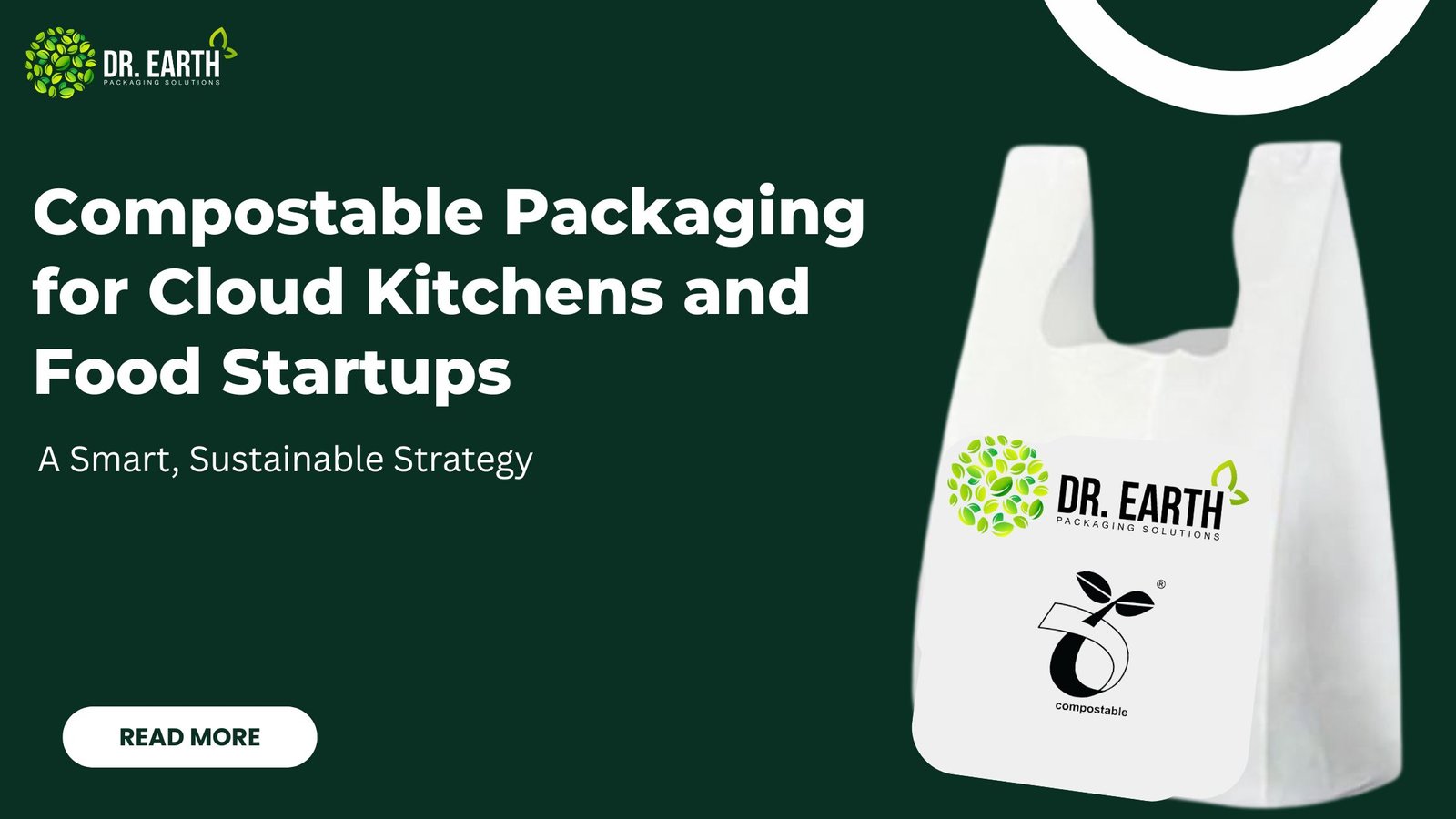
Compostable packaging is a viable and inexpensive option for businesses that want to address packaging sustainability, while also allowing for future growth and success. Dr. Earth is an example of an Indian company offering a comprehensive line of certified compostable bags and packaging systems for cloud kitchens and other new food startups as a means of transitioning away from conventional plastic products towards eco-friendly options for packaging.
In this article we discuss why compostable packaging is a smart choice for your food business, provide insight into the practical application of compostable packaging, and clarify how adopting this solution positions your brand to be positioned for success and sustainability over the long-term.
The Packaging Problem in the Cloud Kitchen Era
Cloud Kitchens and the food startup ecosystem are established for efficiency, omitting dining areas so they can optimise delivery using technology-based order processing. Delivery formats depend heavily on packaging materials to protect food during transportation, unlike dine-in restaurants where food is often consumed immediately after being prepared.
In 2025, India’s food delivery industry alone is expected to create billions of packaging units, including plastics, foam, and other single-use items that require post-consumption management. While these materials are inexpensive and easy to obtain, they do not just disappear:
- They linger in the environment for many years
- Break down into micro-plastics that poison our soil and water
- Find their way into our food systems and cause health problems
- Clog our stormwater drains and fill our landfill
Sustainable consumers, especially Millennials and Gen Z, are becoming much more conscious of packaging waste’s impact on their purchasing behaviour. Reviews and social media are increasingly showcasing disturbing images of plastic waste around kitchens and in neighbourhoods. This will negatively impact food brands’ efforts to create customer loyalty.
Concurrently, regulators are implementing more stringent restrictions on single-use plastics within India, and the waste collection sector is expecting greater responsibility from manufacturers and suppliers.
What Is Compostable Packaging?
Before diving into its benefits, let’s define compostable packaging clearly:
Compostable packaging is made from plant-based and organic materials (such as cornstarch, cellulose, bagasse, PLA, etc.) that break down into natural elements — water, carbon dioxide, and organic matter — under proper composting conditions. Unlike conventional plastics, compostable packaging:
- Does not leave behind microplastics
- Breaks down within a defined time frame
- Turns into material that nourishes soil
- Meets specific certification standards (such as ASTM D6400, EN 13432, or national/international compostability standards)
This contrasts with “biodegradable” plastics, which may break down into smaller pieces but not fully convert into organic matter; often leaving microplastics behind. Choosing the right material — and the right certified supplier — matters tremendously.
Companies like Dr. Earth manufacture court-tested, government-approved compostable bags and packaging made for Indian waste systems, allowing food businesses to embrace sustainability without sacrificing performance.
Why Cloud Kitchens and Food Startups Need Compostable Packaging
Compostable Packaging Helps Solve Major Business Issues:
1. Regulatory Preparedness
India’s phased prohibition of single-use plastics has resulted in many state’s banning carry bags, along with limiting non-represented/ recyclable packaging types. As regulation continues to tighten (including fines and liability for failure to comply) – Early Adoption of Compounding Packaging will put your company ahead of the competition.
The Certification for Compostable Products will increase your business’ compliance with Local Regulation.
2. Reduced Environmental Footprint
The majority of the Food Delivery Packaging is the most visible element of the waste stream. Therefore, By using Compostable Material for Delivery Packaging – Your Company will have a dramatic impact on the amount of material that will be deposited in Landfill, Waterways and Public Space.
By utilizing compostable packaging instead of contributing to a future pollution problem, by Compostable Packaging Functions as an Organic Resource for Supporting Healthy Soil Products.
3. Stronger Brand Reputation and Customer Loyalty
There is a growing Body of Consumer Ethics around Bundling Packaging with the use of Sustainable Packaging that Resonates with Current and Future Consumers and Builds Brand Recognition among your Customers.
Compostable Packaging Will Help Set Your Business and Create a Brand Differentiation vs Prices within the Cloud Kitchen Business.
4. Alignment With Circular Economy Principles
Compostable packaging works with a Circular Economy; therefore, compostable packaging does not create waste because the materials remain in a regenerative loop, meaning you can continue to manufacture new products from the waste. This reduces the amount of natural resources needed to create new products and encourages a circular economy system by utilizing waste streams generated by composting as inputs to future processes (e.g., composting raw food waste into nutrient-rich material to use as soil nutrient).
The businesses that adopt compostable packaging now will be better prepared for the future when Circular Economy is no longer an option but rather an expectation.
Key Compostable Packaging Solutions for Food Businesses
This section provides examples of the most common types of compostable packaging formats available to cloud-based food businesses and other food startups.
Compostable Bags and Liners
Used for:
- Food waste collection
- Wet waste separation
- Secondary packaging
- Takeaway lining
These bags, such as those produced by Dr. Earth, are strong, leak-resistant, and certified to break down completely under composting conditions.
Compostable Food Containers
Ideal for:
- Curries, rice, noodles, and other delivery meals
- Portion trays
- Salad bowls and snack boxes
Made from materials like bagasse (sugarcane fibre) or molded fibre, these containers handle hot, wet foods without leaking.
Compostable Cutlery and Straws
Perfect for:
- Forks, spoons, and knives
- Straws, stirrers
- Disposable plates and trays
Plant-based cutlery ensures every single-use item fits into a compostable waste stream.
Compostable Wrappers and Film
Suitable for:
- Sandwich wraps
- Snack packaging
- Rice paper covers
These thin-film materials offer grease resistance while remaining compostable.
How Compostable Bags from Dr. Earth Are Ideal for Food Businesses
While many compostable products exist, quality and certification vary. Dr. Earth stands out because:
1. Certified Compostability
Dr. Earth compostable bags meet recognised standards for compostable materials suitable for both home and industrial composting conditions. This means they reliably break down into non-toxic organic matter.
2. Designed for Indian Waste Systems
Developed with India’s waste infrastructure in mind, these bags perform well in both decentralised and municipal composting setups — an important factor given India’s varied waste management conditions.
3. Strong and Leak-Resistant
Unlike cheap plastic alternatives that crack or leak, Dr. Earth compostable bags are engineered to handle wet food waste and delivery packaging without compromising performance.
4. Compliance Support
By using certified compostable bags, your business can more confidently demonstrate compliance with plastic bans and waste regulations, reducing legal risks.
5. Brand Differentiation
Using Dr. Earth packaging sends a clear environmental message to customers: your brand prioritises sustainability without compromising quality.
Practical Steps for Implementing Compostable Packaging
With an abundance of compostable products on the market today, it is critical that consumers know the difference between good products and inferior products. Dr. Earth is Superior because:
1. Conduct a Packaging Audit
Dr. Earth’s bags comply with the highest industry standards regarding compostable materials, for both home and industrial composting conditions. Therefore, you can be confident that they will break down completely into non-toxic organic material.
2. Set Clear Sustainability Goals
All of Dr. Earth’s compostable bags have been developed to function well within India’s existing waste infrastructure and work in both Centralized (Municipal) and Decentralized Composting. Given the different waste management systems throughout India, that is very beneficial to many businesses.
3. Choose Certified Compostable Materials
Dr. Earth’s compostable bags will not crack or leak like lower quality plastic bags, and they can easily hold both wet/food waste as well as delivery packaging without sacrificing quality.
4. Train Staff and Partners
Using certified compostable bags gives your company a distinct advantage in proving compliance with both plastic bans and waste management regulations and helps to reduce a business’s exposure to litigation risks.
5. Communicate With Customers
Dr. Earth’s use of sustainable packaging products conveys a positive message about your business: that it is a company that values the environment while offering quality.
Taking Practical Steps to Implement Compostable Packaging
While transitioning to compostable packaging materials is a step in the right direction, a solid strategy is required to effectively make that transition.
6. Partner With Waste Processing Facilities
To complete the circular loop:
- Identify local composting facilities or eco-parks
- Collaborate with neighbourhood waste programmes
- Explore partnerships with composting vendors
Having a proper end-of-life solution ensures your compostable packaging gets processed correctly.
Challenges and How to Overcome Them
Transitioning to compostable packaging is powerful — but not without challenges:
Cost Concerns
Some compostable materials have higher upfront costs than traditional plastics. However:
- Cost savings occur over time through reduced disposal fees
- Enhanced brand value can drive customer preference
- Bulk procurement often lowers per-unit costs
Viewing compostable solutions as long-term investments helps justify initial expenses.
Infrastructure Limitations
Composting infrastructure varies across Indian cities. Yet:
- Many cloud kitchens can adopt decentralised composting
- Compostable bags also support home composting
- Partnering with compost hubs solves end-of-life issues
Working with a knowledgeable supplier like Dr. Earth helps navigate infrastructure challenges.
Consumer Confusion
Customers sometimes use “biodegradable” and “compostable” interchangeably. This can lead to incorrect disposal. To address this:
- Educate through labels and notifications
- Provide simple disposal instructions
- Highlight the benefits of proper composting
Clarity encourages correct behaviour.
The Future of Food Packaging: Trends and Predictions
The shift toward compostable packaging is not a fad — it’s part of a broader trajectory:
1. Stricter Regulations Ahead
The extension of existing plastic bans and the strengthening of extended producer responsibility frameworks (EPR) are being implemented by India as well as many other countries around the world.
2. Consumer Awareness on the Rise
More consumers are choosing brands that align with their values related to sustainability and the impact on climate change.
3. Integration of Tech and Waste Systems
Using smart waste bins, IoT-enabled waste bins for separating recyclables, and a data-driven recycling system will facilitate better management of compostable packaging options.
4. Material Innovation Continues
Increasingly improved compostable materials containing greater strength, heat resistance, and a lower cost are being developed for the benefit of food delivery systems.
Conclusion: Compostable Packaging as a Strategic Advantage
Food Start-Ups and Cloud Kitchens face intense pressure from consumers, regulators, and competitors to not only deliver high-quality food, but to have a low environmental impact. Compostable packaging is an avenue that enables businesses to accomplish all of these objectives.
The use of certified compostable materials such as those produced by Dr. Earth by food-based businesses will:
- Contribute to the reduction of plastic waste and landfill burden.
- Help ensure compliance with emerging regulations.
- Improve customer trust and increase brand reputation.
- Build scalable operations capable of withstanding future demands and challenges.
Sustainable Packaging is no longer an option; it is critical to the success of all future Food-based Operations.
FAQs
Compostable packaging breaks down into natural, non-toxic matter under composting conditions without leaving microplastics.
It reduces plastic waste, meets regulations, and improves brand trust among eco-conscious customers.
Yes, certified compostable packaging is allowed under India’s plastic ban regulations.
Yes, high-quality compostable packaging is leak-resistant and suitable for hot, oily, and wet foods.
Dr. Earth offers certified, durable compostable packaging designed for Indian food delivery and waste systems.
Share:
Related Posts
Send Us A Message
Related Posts