The pharmaceutical industry considers its packaging to be more than just a barrier; it is part of the entire medical product. Each strip of medication, every bottle, and every package that delivers the medication is designed with safety in mind – preventing contamination, moisture, and damage – ensuring that the product gets to the consumer in the condition that it was intended to be in.
Once that purpose has been served, the packaging’s story takes a drastically different turn.
For the overwhelming majority of pharmaceutical packaging, there is no end-of-life. Pharmaceutical packaging cannot easily be recycled due to contamination, hygiene, and safety issues that restrict how it can be disposed of. As a result, a large percentage of pharmaceutical packaging waste is destroyed through incineration or sent to a landfill.
The consequence of this is that the waste is accumulating and is also becoming an invisible issue. While the medications that are delivered through pharmaceutical packaging are working to heal people, the waste created from pharmaceutical packaging is producing long-term environmental damage.
The above scenario is the foundation of this discussion about compostable packaging.
A Shift That Feels Necessary, Not Optional
The pharmaceutical sector has always been slow to adapt to change (and rightfully so). Safety and compliance are essential in this sector, but so is sustainability.
As plastic use around the world continues to increase in volume, the pressure to reduce plastic waste both globally and in India is growing. Governments are putting new regulations in place; healthcare centres are setting sustainability goals; and consumers are more aware of their environmental impact.
Within this evolving world, compostable packaging solutions are moving into being viable alternatives — not just because they are in style, but because they provide solutions to a real need.
Compostable materials are manufactured to decompose into natural parts when they are stored appropriately, just as conventional plastic does. However, compostable materials do not sit around in soil or water forever. Compostable materials do not fragment into microplastics either; compostable materials will maintain their lifecycle alongside nature.
This makes it fairly easy to understand why the pharmaceutical industry, which was created to protect people’s health, would see this transition as a logical next step for them.
Can Sustainability Coexist With Safety?
This is by far the most prevalent and often misconstrued question. When it comes to packaging, especially for pharmaceuticals, there are strict guidelines and regulations to follow; ensuring that pharmaceuticals are stored in their intended state, maintained in a sterile environment, and shipped in recommended temperatures and humidity levels.
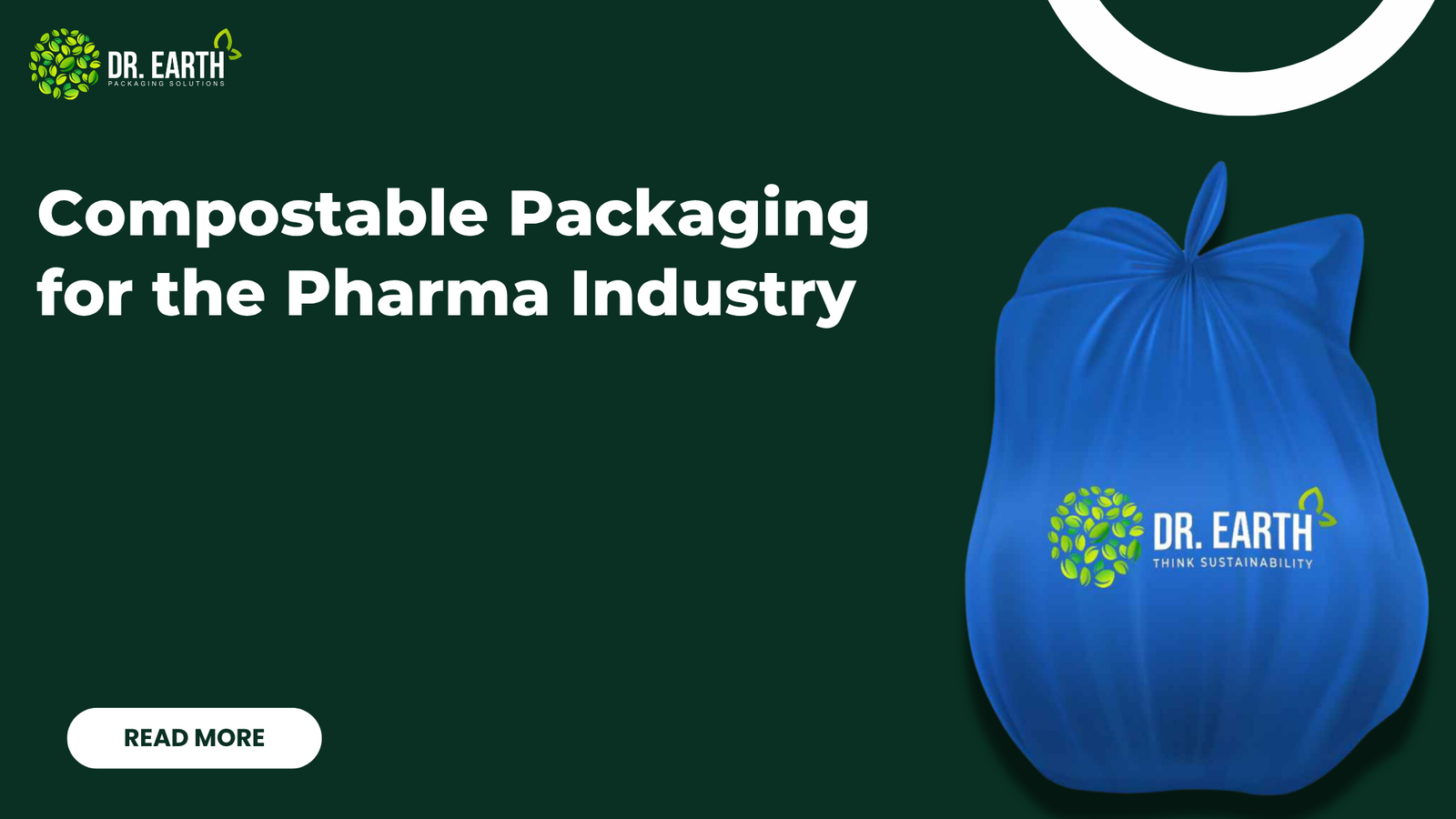
Because compostable packaging does not replace all types of packaging immediately, especially primary packaging that comes in contact with the medication, compostable packaging can still be used today where appropriate and is already being successfully utilized in secondary and tertiary forms of packaging. Some examples are: pharmacy carry bags that are used to transport the medication from the pharmacy to home; the outer boxes used to ship medications; the liners used for collecting expired or unwanted medications; and the packaging used for delivering medications that have been purchased online.
Compostable materials have been designed and constructed to provide sufficient strength and durability to withstand normal usage; they were constructed to maintain compostability after disposal.
At Dr. Earth, we want to ensure that sustainability is part of your existing infrastructure and does not introduce any compromises in terms of safety or serviceability.
Hygiene Remains at the Core
When materials are used in hospitals, clinics and pharmacies, they have to be clean.
Compostable packaging, when produced in a controlled setting, can meet these high-standard expectations.
The unique thing about compostable materials is their application as a single-use product.
Many medical facilities use single-use packaging to help ensure no cross-contamination occurs.
Compostable packaging products are available to meet this practice while reducing long-term effects on the environment.
There is also an advantage to using compostable liners for non-hazardous waste.
Compostable liners make segregating waste easier and disposing of waste more efficient.
Instead of dealing with multiple layers of plastic that must be separated, compostable liners go directly to composting facilities when they are available.
Overall, compostable packaging supports hygiene, rather than compromising it.
The Environmental Responsibility of Healthcare
Healthcare is more than treating illness; it helps to create a healthy environment by providing access to necessities such as clean air, safe water, and fertile soil to live in. Unfortunately, the environmental impact of healthcare packaging is largely disregarded.
The use of plastic in the pharmaceutical industry results in increased landfill space and long-term pollution problems. Over time, this waste breaks down into microplastics, which contaminate our natural ecosystems or even find their way into the food chain and cause health problems.
One way to help reduce this environmental impact is through the use of compostable packaging materials. When composted properly, these products break down in a short period of time and become a natural part of the earth’s regenerative cycle. The residual material will not produce toxic chemicals or accumulate over time.
In India, the implementation of compostable packaging will have a meaningful impact on its developing waste management system. Reducing the amount of plastic waste generated by pharmaceutical companies will relieve pressure from landfill sites, while relieving overall waste management concerns.
The Growing Role of E-Pharmacies
There is also incredible growth in how quickly an order can be placed online and fulfilled by an e-pharmacy.
The e-pharmacy is now an integral member of the healthcare system, and with every order completed, the amount of packaging required continues to increase as medications are wrapped, sealed, and shipped from all over the country.
For e-pharmacies and the healthcare system, the increase in packaging creates a new form of waste specifically created for the purposes of convenience.
Compostable packaging provides an opportunity for e-pharmacies to continue to provide safe and hygienic deliveries while decreasing their environmental impact after consumers have discarded their items.
Additionally, when a healthcare company uses sustainable packaging, it demonstrates a greater concern for overall health, both for its customers and for the earth.
Regulation Is Catching Up
The move to sustainable packaging is being accelerated by changes in policies and regulatory frameworks.
Bans on certain types of plastics are expanding, and new regulations are being put in place to control the amount of plastic waste produced.
ESG reporting is becoming increasingly important in all industries, including the pharmaceutical industry.
As the pharmaceutical industry moves, it is anticipated that there will be an increasing number of regulations that will require the industry to embrace and comply with the new packaging requirements.
By becoming compliant with the new regulations now, e-pharmacies and other companies in the pharmaceutical industry will be able to position themselves to have a smoother transition, mitigate their risk of becoming non-compliant, and build systems that will be ready to respond to future requirements.
Challenges Are Real — But Manageable
It’s a truth universal that all real progress encounters barriers or challenges. Pharmaceutical companies face barriers to change including cost, obtaining regulatory approval, and maintaining a consistent performance level for materials. They must also raise awareness and provide training across operational teams.
These challenges to change are not permanent.
As compostable options gain acceptance among consumers, the technology continues to advance, and compostable materials are becoming increasingly available and dependable. Stabilizing costs, improving supply chains, and clarifying certification procedures are just a few of the positive trends associated with supporting compostability in the healthcare space.
While the transition to compostable solutions may be slow, the direction of these trends is clear.
Why Choosing the Right Partner Matters
In an industry such as pharmaceuticals, where quality is paramount, it is critically important to have a reliable partner to support your decision to use compostable packaging.
Not all packaging designed for composting performs the same as others. Cheap and/or non-certified products used within the pharmaceutical supply chain can pose operational and/or reputational risk.
Therefore, when working with manufacturers, it is essential to work with a trusted resource capable of providing dependable products.
At Dr. Earth, we focus on providing environmentally responsible composting solutions that also meet the requirements of value and reliability. We are committed to ensuring that our clients can incorporate sustainable practices into their business without compromising their day-to-day operations.
Because at the end of the day, there is no substitute for trust in the healthcare space.
A Future Where Packaging Heals Too
Historically, the pharmaceutical sector was set up to be a healing profession; to provide solutions for unwell people. Today, it can also add additional value by offering sustainable packaging options.
Compostable Packaging options enable the pharmaceutical sector to reduce the impact of its production on the environment, while supporting cleaner, greener systems; thereby allowing the industry to contribute to creating an increasingly healthy planet.
As such, the conversion to compostable packaging is not about revamping the entire industry overnight but rather finding opportunities and avenues to utilize these products.
By choosing compostable packaging for some of its products, today’s pharmaceutical companies can both protect their patients and ensure that their products do not harm the world in which we live tomorrow.
Final Thoughts
Compostable packaging is proof that safety and sustainability do not need to be mutually exclusive, but instead can exist side by side.
In an industry where the foundation of success is based on trust, health and safety, and responsible behaviour, finding the balance between these factors is essential to the success of sustainable packaging products.
At Dr. Earth, we are confident that the future of packaging products will be that of products that are used and disposed of effectively, enabling both people and the earth to live in harmony.
Frequently Asked Questions
Yes, compostable packaging can be safely used in the pharmaceutical industry, especially for secondary and tertiary packaging such as carry bags, outer packaging, and delivery materials. When manufactured with certified standards, these materials maintain hygiene and durability without compromising safety.
Compostable packaging is produced under controlled manufacturing conditions, ensuring cleanliness and safety. It is suitable for single-use applications in healthcare environments, where hygiene is critical. For direct contact with medicines, specialized materials are still required, but compostable options are increasingly being explored.
No, compostable packaging used for outer layers or transport does not affect the shelf life of medicines. Primary packaging, which directly protects the medicine, remains unchanged. Compostable materials are mainly used where they do not interfere with product stability.
Compostable packaging breaks down into natural elements under proper conditions, unlike plastic which persists for decades. This reduces landfill waste, prevents microplastic pollution, and supports more sustainable waste management systems in hospitals and pharmacies.
Yes, modern compostable bags are designed to be durable and reliable for everyday use, including carrying medicines and handling logistics. When sourced from a trusted manufacturer, they offer strength comparable to conventional plastic while remaining environmentally safe.
Share:
Related Posts
Send Us A Message
Related Posts