India has emerged as one of the fastest-growing economies in the world. However, in the journey of growth, urbanization is being accompanied by increased waste generation. Housing societies are major generators of municipal waste, meaning they create tons of waste every day. While they are generating and managing this waste, they are mostly managing their waste inefficiently, hence causing harm to the environment, hazards to health, and breaching waste disposal regulations.
The Indian government has implemented a ban on single-use plastics while evermore encouraging people, individuals, and communities to find alternatives that are sustainable. This is where compostable bags are one of the identifiable solutions to what we have been mentioning. Compostable bags are sustainable alternatives to plastic, along with the potential to transform the way housing societies manage their waste, while ensuring compliance with local regulations, creating clean and sanitary environments, and being sustainable for our planet.
In this complete guide, we will cover how housing societies can use compostable bags as a better waste management practice, why Dr. Earth compostable bags are the best option, and finally, how housing societies can start using compostable bags.
Understanding the Waste Management Challenge in Housing Societies
Housing societies produce mostly two of the waste streams, wet waste (organic) or dry waste (recyclable). However, there is no segregation, so everything goes into one bin. This makes processing more laborious, imposes significant sanitary and environmental related hazards on us.
Key challenges include:
- Poor segregation – residents combine biodegradable and non-biodegradable waste streams.
- Dependence on plastics – because they have become too comfortable over the last few decades, and despite bans on many plastic groceries, they still find ways to use plastic garbage bags, whenever convenient.
- Unsanitized disposal – when people put thin plastic garbage bags into the waste bins, they often tear, or leak damaging biohazardous/unsanitary fluids and lead to odors.
- Environmental damage – plastic, still the most common garbage bag, takes few hundred years to degrade, and in doing so, attack our soil and water supply.
- Legal liability – housing societies can incur fines for non-compliance with sustainable practices.
Addressing these obstacles will require a move to more environmentally responsible waste disposal mechanisms; starting off with the work on compostable garbage bags.
What Are Compostable Bags and How Are They Different?
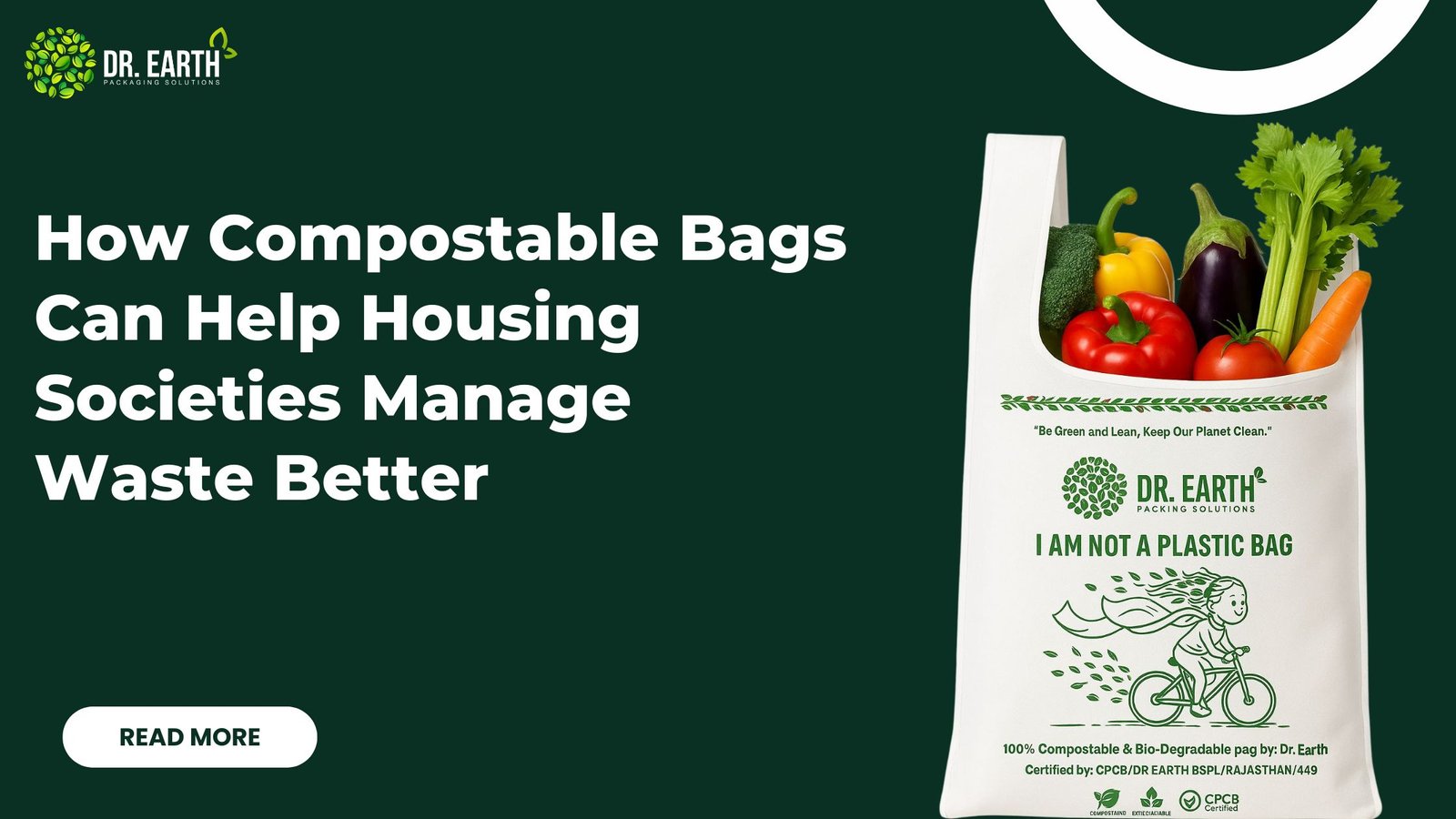
Compostable bags are made from raw natural plant-based materials such as cornstarch, vegetable oils or biobased polymers. Many plastics remain in the environment for hundreds of years in the form of microplastics, and do not break down easily.
Key differences from plastic and biodegradable bags:
- Plastic bags which take hundreds of years to degrade, disburse micro plastics and toxins into the environment.
- Biodegradable bags which can degrade within months to a maximum of a few years but can still leave toxic residue potential aswell.
- Compostable bags which will fully convert into biological matter and plant nutrients.
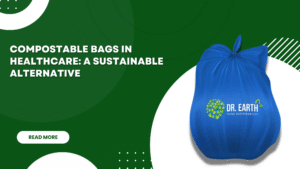
For instance, Dr Earth compostable bags are CPCB-compliant and made from renewable resources, meaning they are safe for the environment and end user.
Why Compostable Bags Are a Game-Changer for Housing Societies
1. Encourage Waste Segregation at Source
Segregation at source is indispensable to managing waste successfully. Compostable bags make it much easier for housing societies to segregate organic waste from recyclables. Residents can keep wet waste in a compostable bag that can be either immediately composted or sent for composting.
2. Reduce Plastic Waste
Replacing plastic garbage bags with compostable bags, a society can eliminate a significant portion of its plastic. This is in keeping with environmental policies from the government while helping to create a cleaner green environment.
3. Improve Hygiene
Even low quality compostable bags from brands such as Dr Earth, will outperform plastic bags. Great quality bags, for example Dr Earth, are sturdy, leak-proof and odour proof, which prevents hygiene problems created by waste disposal.
4. Facilitate Composting
The organic waste which is collected in an approved compostable bag can be made into compost directly on site or sent to a local facility for composting. The compostable bag disintegrates along with the organic waste so it is a simple process to use compostable bags.
5. Support Government Initiatives
Using approved compostable bags can help housing societies qualify for compliance of environmental directives from the government related to the use of single-use plastics, by potentially avoiding significant fines.
The Role of Dr Earth in Supporting Sustainable Housing Societies
Dr Earth continues to be a trusted manufacturer and supplier to consumers, providing compostable bags made from renewable resources.
- Made from plant-based materials such as cornstarch
- Strong and leak-proof, ideal for household and community waste
- Non-toxic, leaving no microplastics or residues
- Available online, making procurement simple for societies
Available online, making it easy for societies to source bags;these bags can also be purchased in bulk online through www.drearth.co.in by the societies so that everyone has them available for continuous use.
Additional Benefits of Switching to Compostable Bags
Beyond waste management, housing societies gain other advantages:
- Improved environmental reputation – Residents are proud to be part of a green space.
- Reduced greenhouse gas emissions – Less waste in landfills leads to reduced methane production.
- Cost savings in the future – compost made from organic waste can also be utilized in gardens where society gardens are planned.
- Awareness building – Residents are encouraged to move towards greater sustainability in their own lives.
How Housing Societies Can Adopt Compostable Bags Effectively
Switching to compostable bags is simple if done strategically:
- Awareness—educate residents on the benefits of compostable bags.
- Distribution—supply Dr Earth compostable bags to all households.
- Segregation—residents will need training on separating wet from dry waste.
- Composting—Implement on-site composting units for the organic waste.
- Monitoring—periodic society waste audits will ensure all residents are compliant.
Use Cases for Compostable Bags in Housing Societies
- Everyday Household Waste – These bags work well with kitchen waste, bathroom bins, and garden waste.
- Community Dust Bins – Our compostable bags are robust enough to be used in larger community bins too.
- Community Events – Use compostable bags as part of your celebrations to manage single-use waste responsibly.
Final Thoughts: Small Steps, Big Change
Sustainable waste management is no longer a choice but a requirement for all housing societies. Compostable bags facilitate waste disposal, enhance hygiene, meet regulatory requirements, and safeguard the environment.
By adopting Dr. Earth compostable bags, societies can demonstrate a meaningful step toward a zero-waste existence. Our CPCB approved bags are an efficient manner to handle waste while being mindful of the environment.
Change today. Visit www.drearth.co.in to order high-quality compostable bags for your society.
FAQs About Compostable Bags for Housing Societies
Q1. Are compostable bags durable for daily household waste?
Ans- Yes, Dr Earth compostable bags are strong, leak-proof, and designed for everyday use.
Q2. Can compostable bags replace regular garbage bags completely?
Ans- Yes, they serve the same purpose as plastic bags but with added environmental benefits.
Q3. How do these bags decompose?
Ans- They break down naturally in 90–180 days under composting conditions, leaving no toxic residues.
Q4. Are compostable bags compliant with government rules?
Ans-Yes, Dr Earth bags are CPCB-approved and meet all Indian regulatory standards.
Q5. Where can housing societies buy these bags?
Ans- They can be purchased directly online from www.drearth.co.in in bulk.