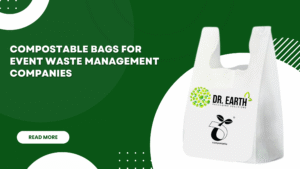
The cities are expanding at a rapid rate. Increased consumption, increased people, increased convenience and, regrettably, increased waste.
Go to any city with metro in India or any part of the globe and you will find the same setback: dustbins stretched to the brim as well as landfills and plastic waste which seems to refuse to fade away.
Whether or not we are generating waste is not the issue.
The actual question is: How are we going to handle in a responsible manner?
Compostable bags are one of the potent solutions that are quietly changing the way waste systems are conducted in urban areas.
We will discuss how compostable bags are both important in lessening the landfill stress, enhancing the separation of waste and assisting cities to shift to a circular economy in this blog.
Understanding the Urban Landfill Crisis
Let’s start with the facts before getting into potential solutions. Urban landfills are severely strained by:
- Rapid growth in cities
- More waste from packaging
- More disposable plastic products
- Poorly separated wastes
- No infrastructure for composting.
Research indicates that most waste in urban landfills is made of organic material—leftover food, vegetable scraps, garden waste and any other type of compostable material.
But here’s the issue:
Most of this organic waste is dumped inside plastic bags.
Plastic does not decompose. It can take 500+ years to break down. When organic waste is wrapped in plastic and buried in landfills:
- They cannot break down properly.
- They produce methane (a potent greenhouse gas).
- They pollute the soil and groundwater.
- They remain in landfills and take up space for decades.
This is why compostable bags can significantly change the equation.
What Are Compostable Bags?
Compostable bags are made from plant sources and include:
- Corn starch
- POLYLACTIC ACID (PLA)
- POLYBUTYLENE ADIPATE-TEREPHTHALATE (PBAT) blends
- Other biodegradable polymers
Unlike traditional plastic bags, compostable bags:
- Will break down to their original natural components
- Will decompose within months in a composting environment
- Will leave no damaging residue
- Will not shed microplastics
At Dr. Earth, we provide compostable, biodegradable bags that were specifically designed for sustainable waste management systems.
So, how does a compostable bag reduce landfill burdens?
Let’s break it down.
1. Enabling Proper Organic Waste Segregation
One of the greatest challenges of managing waste in an urban environment is source segregation.
When average households use everyday plastic shopping bags to contain their kitchen refuse, it presents two major challenges for processing through compost:
- Composting plants cannot process them easily
- Waste becomes contaminated
- Entire batches of organic waste may get rejected
Compostable bags solve this problem.
When food waste is collected in compostable liners:
- The entire bag can go into composting units
- No need to separate plastic manually
- Processing becomes faster and cleaner
- Contamination reduces drastically
This improves efficiency at municipal composting plants and reduces the amount of waste that ends up in landfills.
2. Reducing Plastic Accumulation in Landfills
Traditional plastic waste takes up space in a landfill for thousands of years.
Composting bags, on the other hand, will:
- Break down into water vapor, carbon dioxide and biomass.
- Decompose in an average of 90 days under appropriate composting conditions.
- Be gone from the environment totally after decomposition
If cities can replace a percentage of their single-use plastic carryouts and trash liners with compostables, they will be able to substantially reduce the amount of non-biodegradable waste that is currently accumulating in their community.
For growing urban centers, this directly translates into:
- An extended lifespan for their landfills.
- A reduced toxic impact on the environment
- A lower overall cost of waste disposal for the long term.
3. Supporting Circular Waste Economy
Many cities have begun transitioning from linear economies to circular economies. In circular economies, waste is reused, or repurposed into a resource rather than being disposed of in landfills. Compostable bag usage falls directly in line with this.
Here’s how it works:
- Organic waste collected in compostable bags is transported to composting facilities.
- The organic waste will be composted creating a nutrient-rich compost.
- Farmers and landscapers will receive the compost for use.
The result is a sustainable, closed-loop system as opposed to a linear “produce-use-dispose” process.
Dr Earth, along with other producers of certified compostable packaging solutions, are helping industries, municipalities and homes transition to the circular economy.
4. Reducing Methane Emissions from Landfills
When organic waste is disposed of in a landfill, organic waste is trapped by plastic, which prevents it from decomposing aerobically (with oxygen). Thus, methane, a greenhouse gas that has 25 times the global warming potential of carbon dioxide, is produced anaerobically (without oxygen) when the organic waste decomposes.
If compostable organic waste is sent to a compost facility to be composted:
- The compostable organic waste is decomposed aerobically (with oxygen).
- The amount of methane produced will be considerably less.
- The compost will be controlled to achieve optimum composting conditions.
By promoting compostable bags, cities are reducing greenhouse gas emissions, which in turn improves the air quality in urban areas.
5. Encouraging Responsible Consumer Behavior
Sustainability isn’t just about what we use to create products; it’s a mindset.
As people switch from plastic to compostable carryout bags, they become more mindful about:
- Waste generation
- Proper disposal
- Environmental impact
These small day-to-day changes – such as using compostable trash liners – help create a culture of greater environmental accountability overall.
At Dr Earth, we believe that sustainable products shouldn’t feel like a sacrifice; instead, they should be:
- Durable
- Reliable
- Convenient
- Environment-friendly
By adopting compostable bags, a business or household clearly demonstrates an ongoing commitment toward being environmentally friendly.
6. Supporting Government Plastic Ban Policies
While many urban areas are instituting complete or partial bans on single-use plastic, other factors may limit the desire for businesses and customers’ transition into compliance; specifically, alternative options must also be both practical and scalable.
Compostable bags offer:
- Compliance with plastic ban regulations
- Safe disposal options
- Reduced enforcement challenges
- Environmentally safe alternatives for retailers and households
As legislation continues to pressure industries into providing sustainable products, suppliers such as Dr Earth will have the capacity necessary to provide businesses with dependable sources of compliant compostable bags, without compromising their ability to perform.
7. Reducing Long-Term Waste Management Costs
There are several expenses associated with managing landfill sites including:
- Land acquisition
- Maintenance
- Environmental monitoring
- Groundwater treatment
- Methane control systems
If cities reduce the volume of non-recyclable items and move organic waste away from the landfill through composting, they will:
- Save money on expanding landfills
- Save money on cleaning up our environment.
- Improve people’s health.
Therefore, compostable packaging is beneficial for both the environment and the long-term budget.
Challenges to Consider
Composting bags can be very effective; however, they must be implemented correctly in order to achieve their maximum potential.
There are some key elements to implementing this process.
- Public Awareness Campaigns.
- Education on the importance of source separation.
- Developing the necessary composting infrastructure.
- Using certified compostable items.
If the above mentioned processes are not implemented, compostable materials will not be able to provide full benefit to the environment.
All parties: manufacturers, government, businesses, and consumers must work together on these critical issues.
Why Quality Matters in Compostable Bags
Not all biodegradable bags are compostable.
Some of the issues include:
- They degrade only partially
- They produce microplastics
- They are not certified properly
At Dr. Earth, we focus exclusively on producing high-quality, biodegradable, and compostable bags that comply with the environmental standards as well as actual sustainability and are not just greenwashing.
When you choose a manufacturer, make sure you choose one that can provide you with:
- Reliability of their products
- Compliance with regulations
- A legitimate impact on the environment.
The Future of Urban Waste Management
Two areas where urban sustainability will be achieved in the future are:
- Smart waste separation,
- Composting ecosystems, and
- Circular style of packaging, and
- People being responsible with the choices they make.
Compostable bags are not just an option for you but are an important part of the waste management system of today.
As we continue to grow and develop in cities, there will be less and less space for landfills. The demand for sustainable packaging will continue to increase.
Businesses that take an early lead in implementing compostable solutions to their products will be leading the way to a more sustainable future; not just following it.
Final Thoughts
The pressures the world’s cities are putting on urban landfills are creating significant issues for the environment but can be solved by using a compostable bag to collect organic waste. By moving to the use of compostable bags for organic waste collection, cities will:
- Compress the plastic waste accumulation
- Improve the efficiency of compost for use in healthy soils
- Reduce methane released into the atmosphere as a result of decomposing organic waste in landfills
- Extend the number of years a landfill can be used
- Replace landfill capacity with a circular economy
Sustainability begins with making simple decisions. One such very powerful decision is to use compostable rather than plastic bags for organic waste collection.
At Dr. Earth, we manufacture high-quality biodegradable and compostable bags that help to reduce landfill burden while protecting the environment, so there will be clean cities and a healthy world in the future.
Frequently Asked Questions
Compostable bags help reduce landfill waste by allowing organic materials like food scraps and garden waste to decompose naturally. Unlike plastic bags, they break down into non-toxic components under composting conditions. This prevents plastic accumulation in landfills and reduces long-term environmental damage.
Yes, compostable bags are generally more environmentally reliable than regular biodegradable bags. Compostable bags are designed to fully break down into natural elements without leaving harmful residues. Some biodegradable plastics may only fragment into smaller pieces, potentially leaving microplastics behind.
Under proper composting conditions (industrial composting facilities), compostable bags typically decompose within 90 to 180 days. In home composting environments, the process may take slightly longer depending on temperature, moisture, and oxygen levels.
Yes, compostable bags are ideal for collecting kitchen waste, food scraps, and other organic materials. They make waste segregation easier and can be directly processed in composting units without needing to separate plastic liners.
Compostable bags are a strong sustainable alternative to single-use plastic bags, especially for waste collection and retail packaging. However, proper waste management infrastructure and public awareness are essential to maximize their environmental benefits.
Share:
Related Posts
Send Us A Message
Related Posts

Compostable Packaging for Cloud Kitchens and Food Startups: A Smart, Sustainable Strategy
Read More »