In India, an excessive amount of discarded materials are being produced every day; this has created a major environmental challenge for India. The significant escalation of urbanisation, increasing levels of consumption and population density, have led to waste management being viewed as one of the biggest environmental concerns for India today. Currently, India produces an estimated 160,000 tonnes of waste daily; however much of this waste is not managed, not separated from other materials and simply dumped into overflowing landfills or set on fire – both actions result in pollution, affect climate change and pose a threat to public health.
Fortunately, change is on the horizon. Across India, people are coming together to form “zero waste” communities. To some extent, these communities include residential societies, schools, villages, corporations or municipalities, etc. No matter what type of community or geographical location, all zero waste communities are working toward the same goal: eliminating materials from the waste stream.
A zero waste system consists of a consistent methodology for the hierarchy of waste management, which will consist of reduce, reuse, recycle and compost. To have an effective zero waste system, material needs to be separated at the source, and compostable bags have become a major player in helping to achieve this.
In this blog post, I will discuss the role that compostable bags play in supporting zero waste models in India; their importance to the future of sustainable development; and the creation of cleaner, healthier cities and communities.
What Is a Zero-Waste Community?
A zero waste community is a community working toward eliminating waste from landfills by implementing conscious and responsible methods of consumption and waste management. Rather than being viewed simply as something to be discarded after use, waste is viewed as a valuable resource.
A zero-waste cycle involves:
- Reducing unnecessary consumption
- Avoiding single-use plastics
- Reusing materials wherever possible
- Recycling non-organic waste
- Composting organic waste
In India, approximately 50-60% of the household waste produced each day consists of organic materials; however, the majority of this material ends up being mixed in with plastic materials which makes the composting process even more difficult to accomplish successfully. Compostable bags are essential in this regard.
Why Compostable Bags Matter in Zero-Waste Systems
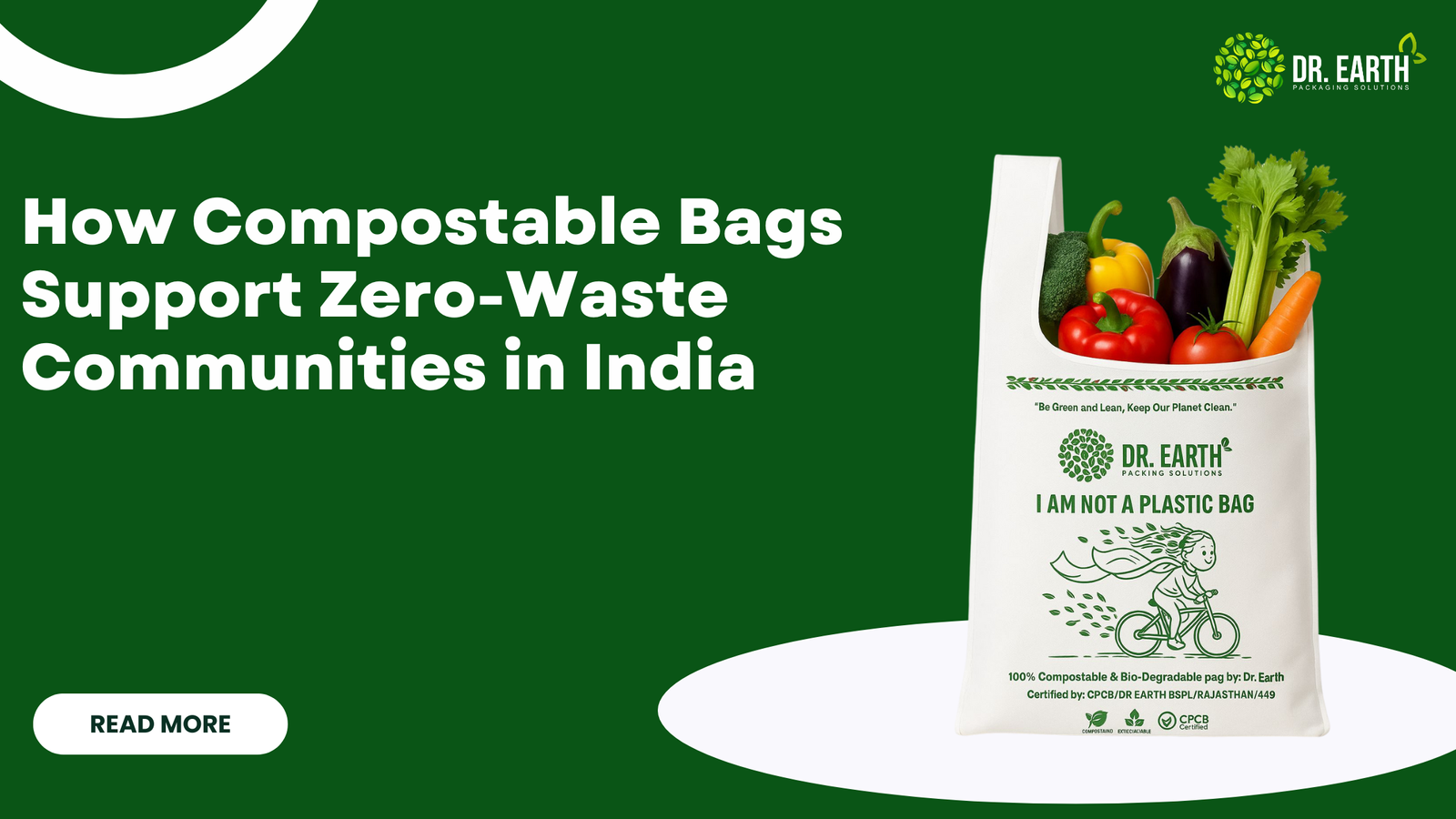
Composting will only be effective when the organic waste is kept uncontaminated and separated from other forms of waste. Compostable bags provide households and businesses with a clean, hygienic, and odour-free way of collecting kitchen scraps, leftover food, and plant matter.
Unlike plastic bags (whether regular or biodegradable), compostable bags will completely break down and revert back to natural materials (compost) within 3-6 months if they are placed in a proper composting environment.
In addition to providing convenience, compostable bags also play an important role in helping to address the larger scale waste management issues that are currently being experienced in the world today.
- Cross-contamination in dustbins
- Plastic-lined organic waste sent to landfills
- Difficulties in handling wet waste
- Poor hygiene in waste storage and collection
Compostable bags are providing a way for citizens, municipalities and waste workers to work together towards zero waste by allowing a clean and compost ready waste collection method.
How Compostable Bags Support Zero-Waste in India
Compostable bags have helped improve sustainability in multiple ways as they assist in helping move India toward sustainability.
Supporting Household Segregation
Composting and zero waste starts in the home. If compostable bags are used for wet waste, it makes household segregation easier and cleaner. Having compostable bags as an option promotes continued successful participation, which is key to impacting a community-level.
Making Community Composting Practical
There are a number of Indian housing societies, gated communities, and villages adopting either decentralized composting facilities or communal composting pits. Compostable bags allow for the transfer of organic waste into these facilities or pits without the need for repacking or sorting.
Reducing Landfill Burden
When organic waste is wrapped in plastic prior to entering a landfill, it releases methane, a very strong greenhouse gas. Compostable bags prevent plastic contamination allowing organic waste to be returned to the soil rather than decomposing at a landfill.
Improving Waste Worker Dignity
Wet plastic trash is unsanitary, hazardous, and difficult to handle. Compostable bags help create safer and more sanitary conditions in the process of handling garbage for sanitation workers..
Encouraging Behavior Change
Forming habitual behaviours is one of the main roadblocks to implementing a successful zero waste system. Use of compostable bags makes it easier and more convenient for people to make sustainable choices, especially when using community composting systems.
Examples of Zero-Waste Communities in India Using Compostables
Across India, real examples demonstrate the effectiveness of compostable packaging in building zero-waste ecosystems.
Cities like:
- Indore
- Mysuru
- Ambikapur
- Alappuzha
- Pune
In some of India’s largest cities, such as Bengaluru and Mumbai, municipalities are now requiring all residential apartment complexes to provide compostable bags for the collection of wet waste. Likewise, there is significant encouraging of vendors by many municipal corporations through the use of compostable carry bags in lieu of one-time-use plastic bags.
Through these programs, it can be demonstrated that compostable packaging is not just a concept but rather will be instrumental in the evolution of waste systems.
As a company, Dr. Earth has been at the forefront of helping people adopt a zero-waste lifestyle through education, advocacy and providing significa nt solutions for manufacturers in the composting industry.
The Role of Dr. Earth in Enabling Zero-Waste Adoption
Dr. Earth has taken the lead when it comes to manufacturing the largest selection of certified compostable bags in India. Their bold promise at Dr. Earth is to create all their products from 100% natural plant materials. Additionally, Dr. Earth offers the following features in its product line:
- CPCB Approved
- Non-Toxic
- Safe for use in Composting Systems
- Strong, Leakproof, Durable Products
Products include:
- Compostable Garbage Bags
- Compostable Carry Bags
- Grocery and Food Packaging Bags
As an environmentally conscious manufacturer of products, Dr. Earth is committed to providing communities, businesses, and local governments with a smooth transition into zero-waste systems by providing them with eco-friendly alternatives to traditional plastic products.
Challenges in Scaling the Model — and How India Can Overcome Them
While compostable bags are a powerful catalyst, challenges remain:
- Lack of public knowledge about compostable bags
- Cost of compostable bags compared to traditional plastics
- Infrastructure to support composting
- Misunderstanding of terms like Biodegradable and Compostable
This is rapidly changing due to government regulations, consumer demand and an ever-expanding network of composting collection and facility operators.
Educational initiatives, local and regional policy-level incentives and mentorship will all continue to promote and advance the use of compostable bags.
A Future Built on Circular Thinking
Zero Waste Communities Assist in Building a Circular Economy from Which All Resources Are Built as Cycles That Continue to Cycle Resources Until the End of Their Life Cycles, Where Waste Has Positive Value. Compostable bags are an important step toward creating an ongoing cycle of organic material converted back to Nutrient-Rich Soil, therefore benefiting food production systems, and reducing the use of synthetics including fertilizers.
As the number of zero waste communities in India continues to grow, the use of compostable plastic bags will become commonplace and Widespread Not Only in the Following But Also Within the Next Several Years:
- Homes
- Restaurants
- Schools
- Hospitals
- Supermarkets
- E-commerce businesses
The future will not be waste-less by chance — but by choice.
Conclusion
Compostable bags serve not only as eco-friendly alternatives for households, but also as a catalyst for systemic change by allowing for waste segregation, supporting composting efforts, reducing pollution, and providing citizens with access to circular systems. This is the foundation upon which the zero-waste revolution in India has been built.
Through the increased adoption of compostable solutions amongst individuals and institutions alike, India is on the path towards a future in which landfills will no longer dominate the landscape, ecosystems will thrive, and sustainable practices will be fully integrated into daily living as opposed to simply being a “trend.”
As evidenced by the many successful zero-waste communities, the future of India is at our fingertips and compostable bags are instrumental in making that a reality.
FAQs
Q1. Can compostable bags replace plastic in daily waste management?
Ans- Yes. Compostable bags are suitable for wet waste, dry waste segregation, and retail use. They are ideal for zero-waste households and municipalities.
Q2. Are compostable bags safe for compost pits and home composters?
Ans- Yes. Certified compostable bags break down naturally and do not leave toxins or microplastics behind.
Q3. How long does it take for compostable bags to decompose?
Ans- Typically 3–6 months depending on moisture, temperature, and composting environment.
Q4. Are compostable bags more expensive than plastic?
Ans- Initially, yes. However, long-term benefits include reduced landfill costs, environmental restoration, and regulatory compliance — making them cost-effective.
Q5. Where can communities purchase certified compostable bags in India?
Ans- Communities can purchase certified, CPCB-approved compostable bags from trusted manufacturers like Dr. Earth, who supply eco-friendly solutions across India.