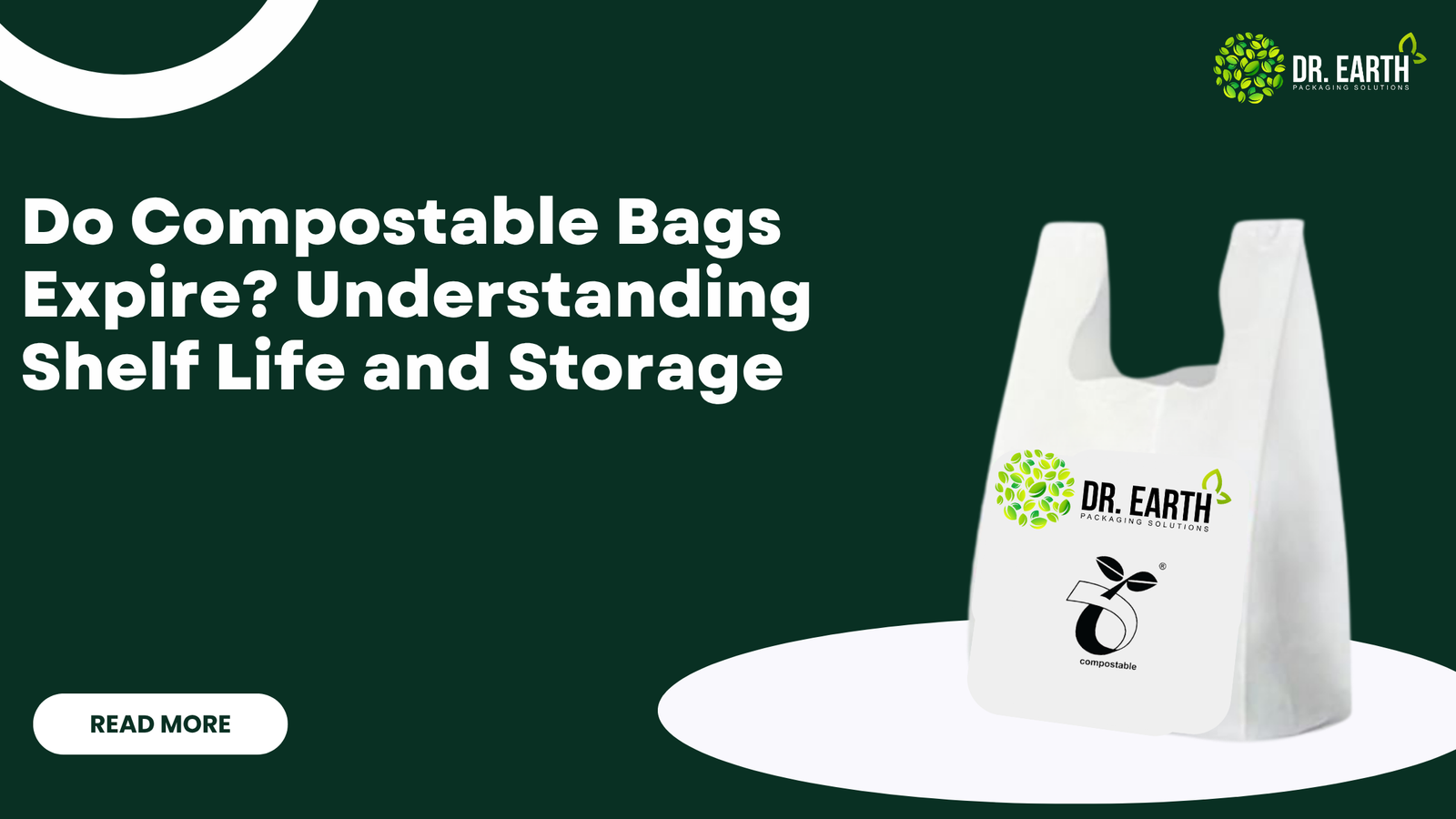
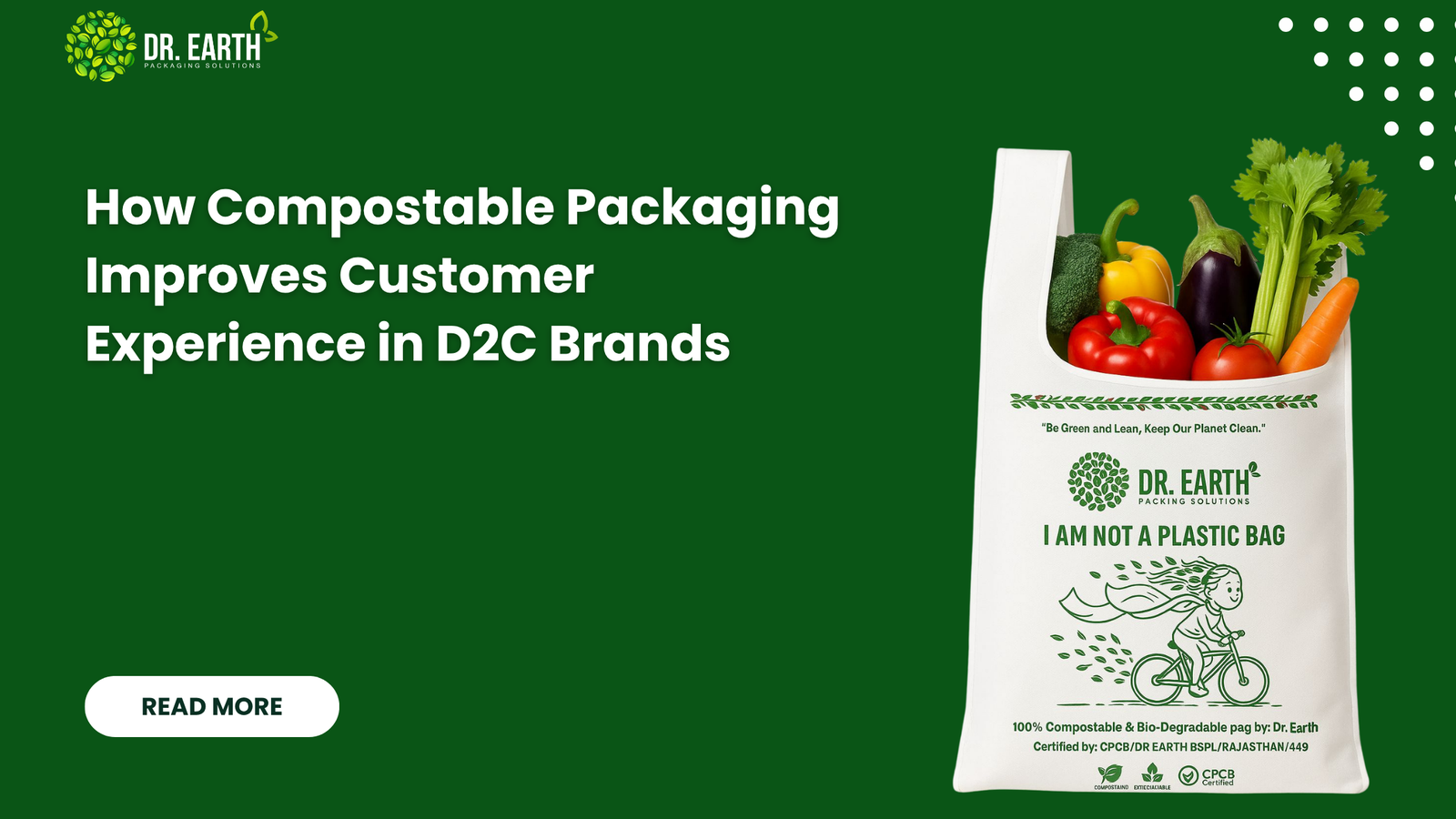
The package sector is experiencing a seismic shift. Growing environmental issues and consumer consciousness has catalyzed compostable technologies as a preferable replacement for traditional plastic packaging. Compostable materials are gaining significant acceptance as a viable waste alternative covering everything from carry bags and grocery packaging to food containers to garbage liners.
At Dr Earth, we see innovation as a sustainable responsibility. The compostable bags we make are products that embody a transition to a cleaner, greener, and much more sustainable future in India and worldwide.
What is Compostable Technology?
When materials can break down completely into natural elements (carbon dioxide, water, and biomass) through composting conditions, they are said to be compostable. Compostable materials, unlike typical plastics, decompose into elements that do not produce harmful microplastics or toxic residues.
These materials are commonly derived from renewable resources such as:
- Cornstarch
- Potato starch
- PLA (Polylactic Acid)
- Sugarcane fiber
- Other plant-based polymers
These materials are therefore 100% safe for the environment and may help replace petroleum-based plastics in packaging applications.
Why Compostable Packaging Matters
Plastic waste is one of the world’s most significant environmental challenges. Globally, more than 400 million tons of plastic is produced every year, and less than 10% is recycled. The remaining plastic ends up in our landfills, ocean and into natural ecosystems.
In contrast, compostable packaging:
- Naturally decomposes in 3-6 months in a composting environment
- Does not emit harmful chemicals
- Reduces reliance on fossil fuels
- Supports composting and waste separation
By incorporating compostable technology into our daily lives, consumers and industries can actively reduce their carbon footprint.
How Compostable Technology Works
Compostable materials are intended to replicate the longevity and strength of traditional plastics for their intended use but break down in a composting environment. Here is how it works:
1. Disposing: Compostable packaging is to be disposed of in a compost pile and not in the ordinary waste.
2. Breaking Down: The decomposition process is the decomposing process, which is done under heat, humidity and microorganisms.
3. Breaking down to Humus: The decomposable substance will result in humus (organic fertilizer) that will serve soil.
4. Circular Economy: This compost is capable of delivering nutrients to the new plants in the sustainability of the circular economy.
It is this approach to circularity that makes compostable technology a true innovation of sustainable packaging.
The Rise of Compostable Packaging in India
India alone produces over 3.4 million tonnes of plastic waste every year. This challenge now requires various avenues to be explored. Growing awareness, as well as government action to end single-use plastics, may also lend support.
Dr Earth is leading down this path with our certified biodegradable and compostable bags, which conform to international standards around safety and environmental guidelines. Our packaging is based on cornstarch materials and will decompose naturally—with no toxic leftovers.
Compostable packaging is now widely used in retail, households, hospitality, and agricultural practices.
Innovations in Compostable Technology
The compostable materials arena is growing at a rapid rate. Scientists and manufacturers are collaborating with one another to improve the strength, flexibility, and durability of products while maintaining their biodegradable properties. The following are examples of recent advancements in the subject matter:
1. Advanced Bio-Resins
New bio-resin materials are currently in development to replace traditional plastic products made from petroleum-based polyolefins. These novel materials boast all characteristics needed for product integrity during use, and fully break down when disposed of properly.
2. Multi-Layer Compostable Films
Compostable films are being utilized in food packaging, replacing plastic wrap films, which were multilayer and impossible to recycle.
3. Water-Resistant Coatings
Natural coatings have been developed so that compostable packaging can be water-resistant, increasing their applications in the food and beverage industry.
4. 3D Printing with Compostable Materials
Materials, like PLA, have biopolymers that can be used in 3D printing. Sustainable manufacturing is now a possibility through the use of those materials.
5. Smart Compostable Packaging
Compostable packaging can be combined with QR codes and/or tracking systems to permit an eco-conscious consumer to track the environmental effects of their packaging choices, providing for a more eco-conscious consumer.
How Compostable Packaging Supports the Circular Economy
The concept of a circular economy strives to reduce waste, and never waste resources by continually reusing them as materials are activities. Compostable considerations would replace waste with the breakdown of valuable nutrients that will improve the soil.
Here’s how it contributes:
- Reduce landfill waste
- Encourage composting
- Promote renewable resources
- Support local waste management systems
By replacing single-use plastics with compostable products, cities and communities can focus on zero waste.
Challenges Facing Compostable Packaging
While compostable products are an excellent opportunity, several challenges remain:
- No composting infrastructure: Not every city has industrial composting facilities.
- Consumer confusion: Many individuals cannot distinguish between compostable and biodegradable.
- Price: First, compostable products cost a little higher than the conventional plastic.
- Misuse: The products that are made of compost can be mixed with non-compostable waste and placed in landfills where they do not decompose fully.
These obstacles are however being overcome at an alarming rate with further enlightenment and progress in technology.
Dr Earth: Leading the Compostable Revolution
In Dr Earth, we strongly believe in the need to create packaging that is environmental friendly in order to save the people and the planet.
Our Products Include:
- Compostable Garbage Bags: Good to use at home, office as well as business.
- Compostable Carry Bags: Durable, stylish, and eco-friendly.
- Compostable Grocery Bags: Suitable for retailers and supermarkets.
Why Choose Dr Earth:
- CPCB Certified
- We’re made from responsibly grown, plant-based materials
- We fully biodegrade and compost
- We are safe for people, pets, and the environment, non-toxic
Our mission is to find safe and sustainable alternatives to hazardous plastics that support India’s green aspirations.
The Future of Compostable Technology
Compostable technologies have a bright future. With the growing intensity of the environmental policies by governments and the increasing demand of sustainable products among buyers, compostable packaging will become the standard.
In the next decade, we can expect:
- Further implementation of compostable packaging in the FMCG, food delivery and retail sectors.
- Increased longevity by development of materials science.
- Increase in urban composting plants.
- Collaboration of technology providers, manufactures and policymakers to help mass adoption of these solutions.
At Dr Earth, we are proud to be a part of this revolution, helping drive the change towards a cleaner, greener tomorrow.
Conclusion
Compostable technology is not just a trend but one of the cornerstones for the future of the planet. As pollution increases and plastic waste continues to impact ecosystems, it is now a necessity to adopt compostable products.
We can all work at decrasing waste and living sustainably by using compostable bags and packaging whenever possible.
Dr. Earth leads the way with a commitment to quality, innovation, and sustainability with their compostable packaging. Let’s take action together toward a future when the items we purchase will help, and not harm, the environment.
Frequently Asked Questions
Q-1. What makes compostable packaging different from biodegradable packaging?
Ans- Compostable packaging turns into natural elements in composting conditions and leaves no environmental toxic substances. Biodegradable products may only partially decompose and can still leave microplastics behind.
Q-2. How long does it take for compostable bags to decompose?
Ans- In composting conditions, compostable bags typically decompose in 3-6 months, but this could change from 2-24 months depending on temperature, moisture, and amount of biomass and microbes.
Q-3. Can I compost Dr Earth bags at home?
Ans- Yes! You can compost Dr. Earth compostable bags in your kitchen or backyard compost bins, assuming that the bin has sufficient heat, moisture, and active microbes.
Q-4. Are compostable bags safe for storing food?
Absolutely. Dr. Earth bags are made from food-grade, non-toxic materials, so they are safe to place foods in when you roll your groceries at the supermarket.
Q-5. How can businesses switch to compostable packaging easily?
Ans- Businesses can start by using certified suppliers—like Dr. Earth—who provide assurance that they have thoroughly considered their entire supply chains and have effective disposal systems in place to compost packaging products and return them to the soil. Businesses should also help educate their customers about making good composting and disposal choices.