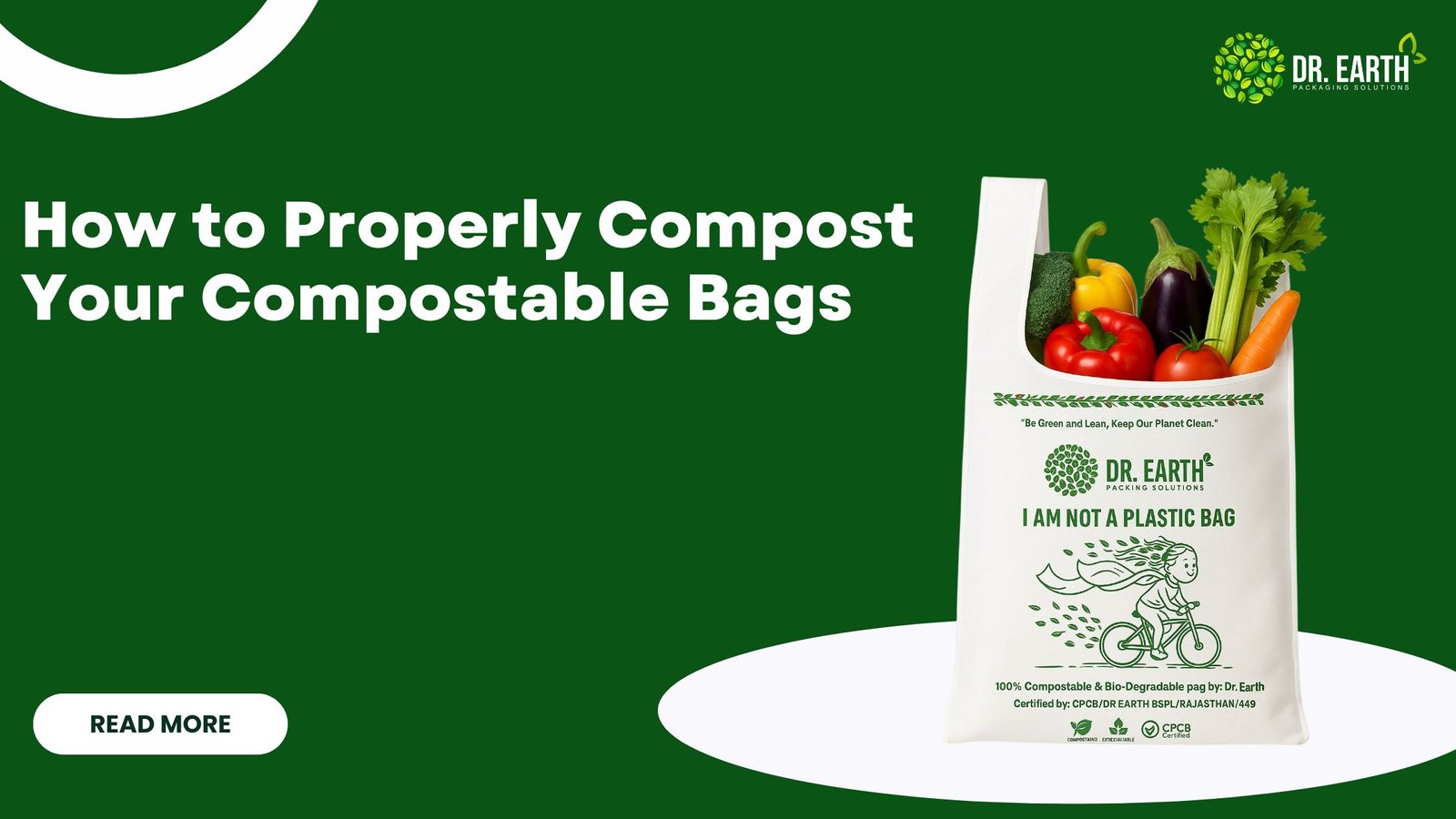
Compostable bags are one of the best options to decrease pollution caused by single-use plastic. These bags are compostable because they will break down naturally and then return back to the earth — no bad residue left behind! However, there is a catch: compostable bags are only useful and can only serve their purpose if you dispose of them properly. If you throw these bags into the wrong bin, you are actually negating all the work the bag has done for the planet.
In this blog we will discuss where to actually compost the compostable bags, why it matters, and what you can do at home, with a community composter, and via a commercial composter. Hopefully, after reading this blog you will not only learn how to compost such bags correctly, but also feel empowered to continue helping the planet.
Why Composting Your Compostable Bags Matters
Compostable bags are made with natural, plant-based materials like cornstarch or other renewable materials. Compostable bags are distinct from biodegradable plastics, which sometimes leave behind microplastics. Bags are designed to decompose back into non-toxic, usable components given the right conditions.
If you incorrectly dispose of a compostable bag–for example a landfill–it may not degrade as intended due to no oxygen, little or no heat, and no appropriate moisture!
Composting compostable bags is not just a method of disposal; it is a way to close the loop in a circular economy.
Step-by-Step Guide to Composting Compostable Bags at Home
Composting compostable bags at home is one of the best ways to divert compostable bags. Here’s how you can do it!
1. Check for Certification
Ensure your bag is truly compostable by checking for certification marks such as:
- BPI (Biodegradable Products Institute)
- EN 13432 (European Standard)
- ASTM D6400 (U.S. Standard)
- CPCB Certification (India-specific regulation)
These marks will indicate that your bag is compostable under industrial or home composting challenges.
2. Shred the Bag into Smaller Pieces
Large compostable bags will take longer to decompose, therefore cut or shred your compostable bags so it breaks down much faster.
3. Mix with Organic Waste
Compostable bags should not be composted alone, so mix in with your kitchen waste – vegetable peels, fruit scraps, old coffee grounds, etc. Combine your bags with garden waste such as dry leaves. It is absolutely essential to have a balance of greens (nitrogen-rich waste including veggies and fruit) and browns (carbon-rich waste like dry leaves, cardboard, newspapers) to compost.
4. Maintain Proper Conditions
- Aeration: Remember to aerate and flip the pile regularly for oxygen.
- Moisture: Keep the compost moist but not soggy.
- Temperature: To speed up the breakdown time it is important that compost piles have a high temperature.
5. Patience Pays Off
Home composting takes 3-6 months for compostable bags to decompose depending on the conditions.
Composting Through Community Programs
If you have no space to have a compost system at home, many cities and towns have community composting. They collect organic waste and send it to local composting facilities.
How It Works:
- Store your food waste and compostable bags in a bin.
- Drop it off at your local compost place or have it picked up.
- The waste will be turned into compost at a large-scale composting facility to break it down quickly.
Great choice if your compostable bags state that they can only be broken down in industrial composting conditions (most bags do).
Composting at Commercial Facilities
Some compostable bags were designed to be composted at an industrial facility where the methods of breaking down waste is done using superior equipment and high temperatures.
Why It’s Effective:
- Bags break down faster than at home compost piles.
- The compost produced is screened for contaminants and used for large-scale agricultural or landscaping use.
- Facilities ensure environmental standards are being met.
If your bag says “commercially compostable” you have made the right choice.
Common Mistakes to Avoid
People often squeeze compostable bags into landfill use, which limits their potential in reducing environmental impact. Here are just a few misunderstandings to look out for:
- Throwing Compostable Bags in Regular Trash
When compostable bags wind up in landfills, they just won’t compost efficiently, instead, they release methane.
- Confusing Compostable with Biodegradable
Not all biodegradable plastics are compostable, in fact, some biodegradable plastics might remain in the soil for hundreds of years and leave behind toxins. When considering biodegradable plastics, always check for the proper certifications.
- Not Shredding Bags Before Composting
Any large, intact bag is going to take much longer to break down and could create problems in your pile.
- Composting with Inorganic Waste
Never mix compostable bags with glass, metals, or typical plastics, these will all contaminate the compost.
- Overloading the Compost Pile with Bags
It is important to compost bags with a balanced approach in a mix of kitchen and garden waste – not throw a pile of bags into a compost pile!
The Environmental Benefits of Composting Compostable Bags
These bags do much more than just simply take the place of plastic bags when composted properly, for they:
- Divert Land Fill: Eliminating bags from landfill helps limit methane emissions.
- Nurture Soil: Compost nurtures soil health, fertility, and water retention.
- Composting as a Circular Economy: Waste returned to the Earth fosters regenerative cycles.
- Cut Carbon Footprint: Using plant-derived (and making sure to compost) has the effect of reducing reliance on fossil-fuel-based plastics.
Final Thoughts
Compostable bags are not simply the latest green “craze”, they are indeed a fact in reducing plastic use. But, like with anything, how they are disposed of makes all the difference. If used in a backyard composting system, community composting program, or an industrial composting facility and treated in isolation, you can be part of the solution for a cleaner planet and a sustainable future.
If you are just starting out, take small steps: compost your kitchen scraps and toss a bag, shredded, into your compost pile. Over time, you will see the benefits in your soil, in the way you think about waste management, and possibly in the reduction of your carbon footprint.
The route to sustainability depends on making very small decisions today—composting compostable bags is one of the easiest and most effective measures toward that goal.
FAQs on Composting Compostable Bags
Q-1. Can I compost compostable bags in my backyard?
Ans- Yes, provided that they are certified to be home compostable bags. Only compost bags that are meant to be taken to an industrial facility might not fully decompose in the backyard compost system.
Q-2. How long does it take for compostable bags to decompose?
Ans-About 3-6 months in a backyard system, and 1-3 months in an industrial composting facility.
Q-3. Can I put compostable bags in a regular recycling bin?
Ans-No. The compostable bags cannot be recycled with the plastics. They should take their waste to a compost plant.
Q-4. Do compostable bags smell when decomposing?
Ans-Not if managed properly. A properly aerated compost pile is not supposed to stink.
Q-5. Are compostable bags safe for plants once composted?
Ans- Yes. When the compost is completely decomposed it is not only nutrient-rich but it is also safe to plants.