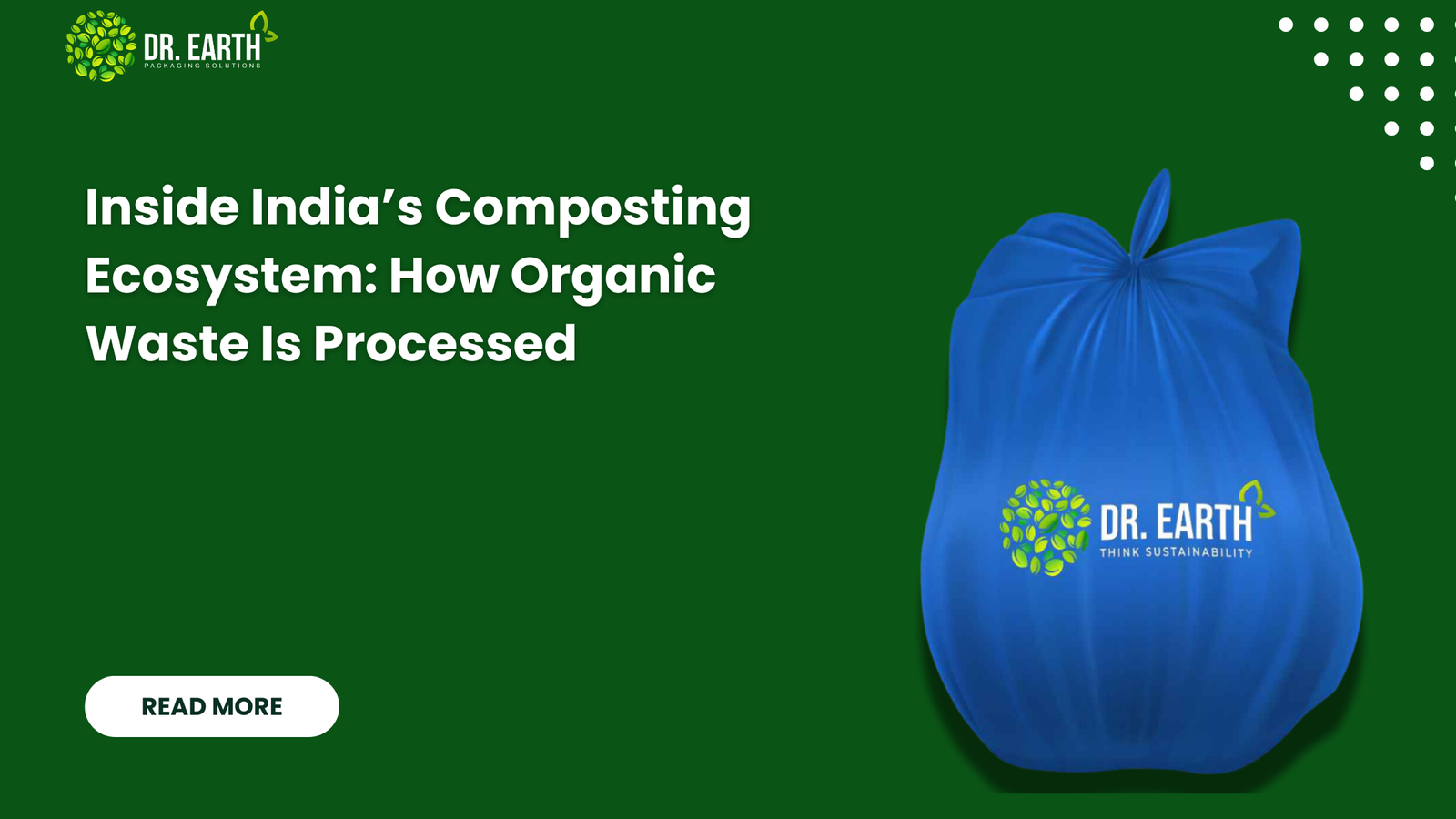
India is facing a waste crisis that cannot be ignored anymore. With rapid urban growth and changes in how people consume goods, coupled with increased population size, the total amount of waste generated daily has exploded. We often hear about plastic waste as being a large part of India’s waste, but the larger portion of the Indian waste stream is actually made up of organic waste.
Organic waste actually refers to anything that comes from plants and animals. This encompasses all food wastes, vegetable peels, garden residues, agricultural wastes and floral wastes. Together, all these organic materials are greater than half of the total amount of waste produced by India every day. How we treat and process these organic wastes will dictate whether we create an environmental issue or create an environmental opportunity. Composting is at the centre of that transition.
As the composting movement grows across urban areas, towns and even rural villages, it is quietly transforming the relationship of waste as a resource and changing the way communities view sustainability.
Why Organic Waste Is Central to India’s Waste Challenge
Organic waste is often considered “harmless” due to its origins in nature. However, the negative effect that organic waste has on the environment is highly dependent on the management of organic waste. The organic component of waste breaks down in landfills without the presence of oxygen, resulting in the production of methane, which is a much more potent greenhouse gas than carbon dioxide.
If organic materials are not managed correctly, they can contaminate groundwater, create increased air pollution/foul odours, and create an even greater climate change impact. On the other hand, when organic materials are properly composted, they will break down naturally and create nutrients, which can enhance soil quality.
Composting in a country such as India, where soil health is diminishing and farmers rely heavily on chemical fertilisers, has additional advantages beyond waste management itself.
Segregation at Source: The Foundation of Composting
Every composting success starts with segregation at source; when organic waste is mixed with plastic and other non-biodegradable materials, it prevents any of the composting systems from functioning correctly.
Over the past few years, with increased awareness about waste segregation through government regulations and public campaigns, more households have begun separating their wet and dry waste, as well as bulk waste generators (hotels, housing societies etc.) being charged with managing their organic waste.
Compostable bags have been a significant contributor in improving this situation.
These bags allow for the sanitary collection of wet waste without contaminating composting systems with plastics. This one small change has made composting much more practical for both households and municipalities.
What Happens After Organic Waste Is Collected
After being segregated, organic waste travels a much different route than dry or plastic waste does. In many of India’s cities, wet waste is collected and separated from plastic waste and then transported into separate composting facilities (or in some cases, directly into bio-processing units) for processing. In many residential societies and larger institutions, organic waste can also often be processed at the source by the use of decentralized composting systems.
The move toward decentralized composting has become increasingly popular as it reduces transportation costs, reduces the amount of fuel consumed transporting it and reduces the overall dependency on landfills. Furthermore, with a decentralized method, communities can be held accountable for how their organic waste
Inside a Composting Facility: How Waste Becomes Compost
After arriving at a Composting Facility, organic waste begins the process of transformation. After the contaminants are removed, the organic waste goes through processing. All across India, composting facilities use different composting techniques based on the size of their operation and regional location.
Common composting methods include:
- municipalities using Open Windrow Composting for processing large volumes
- Housing Societies and Institutions use Enclosed or Mechanical Composters
- Rural and Semi-Urban Areas often use Compost Pits/Bins
Microorganisms serve as the primary agents of degradation during composting. Proper balance among oxygen, moisture, and temperature allows the Microorganisms to convert Organic Matter into less-complex compounds. After an adequate period of time, the Organic Matter loses its Original Form and becomes Black, Nutrient-Rich, and Compost.
Depending on the method of composting and type of Organic Waste processed, this entire process may last from weeks to months.
Composting Practices Across Different Parts of India
India has many different systems for composting, with varying methods being used in both rural and urban areas. Rural farmers often used compost as a traditional means of using agricultural waste as an enhancement to their soil. Farmers typically will compost using a combination of plant material (crop residues), animal waste, and household food scraps.
Urban areas have begun using more organised forms of composting. For example, many cities have developed structure allowing for decentralised composting, where housing societies create their own small-scale composting facilities. In addition, many of the large wholesale and retail vegetable and agricultural marketplaces, or “mandis,” send organic waste directly to facilities for processing. Many religious temples have also begun providing composting facilities for the flower offerings made by parishioners, and stopped dumping these offerings into local rivers.
Another recent method of composting being used in many cities is called “bio-methanation.” In this process, organic waste materials are converted into biogas fuel for cooking or generating electricity using anaerobic digestion methods. The residual material, or “digestate,” from this process, is then processed into high-quality compost, creating a sustainable, closed-loop system that ultimately produces both biogas energy and organic nutrients for the soil.
Why Compost Quality Is So Important
While composting can provide many benefits to soil, not all compost materials are equally beneficial. The best compost is free from plastic materials, pathogens, and toxic materials and has matured through the natural process of composting. Matured compost has demonstrated, over time, that it has improved soil structure and has greater water retention capabilities than compost that has not matured properly.
In addition to improving and restoring degraded soils, compost also can help to reduce the need for synthetic fertilisers. On the other hand, low-quality compost materials can introduce harmful materials (including “micro-plastics”) into the soil. Clean separation of compostable materials from all of the other types of waste products is essential to producing clean, high-quality compost.
The Human Side of India’s Composting Ecosystem
All composting systems depend on community involvement to continue functioning (policymakers, collection systems and greater production facilities are operated by municipal organizations as part of the system). Waste collection service providers Through the use of innovative technology and innovative business model tactics, the waste disposal industry has introduced significant improvements in waste processing capabilities.
There are also opportunities for advancement through the implementation of new methods from start-up companies and social business (as opposed to traditional for-profit companies), which typically provide decentralized composting opportunities for residential, commercial and institutional facilities.
A further portion of the composting community consists of groups and organizations focussing on education and behavior change related to the environmental and social benefits of composting. However, informal waste collectors successfully working in the composting network must remain aware of their critical role in the collection and separation of waste to ensure continued success for the composting facility.
The Role of Compostable Products in Composting Success
Contamination of compost from disposed of plastics has been a problem hindering the successful implementation of composting programs in India since its inception. Even very small plastic items have been known to totally destroy an entire batch of processed material. Therefore, the introduction of Compostable bags and other compostable products will greatly reduce the number of plastic contaminating organic waste during the composting process.
Compostable bags are certified compostable and therefore will break down naturally during the composting process along with the other organic materials and therefore, will not become microplastic contaminants. As such, Compostable bags and other compostable products will facilitate the effcient handling and successful disposal of waste, will enhance the hygiene of the discarded compost, and will greatly improve the quality of the compost produced The regulations that are now being introduced to the legislation to phase out single-use plastics will ultimately make it impossible for any waste management program to operate in compliance without the introduction of compostable items.
Challenges That Still Exist
While composting in India has seen progress, it still faces challenges. Lack of segregation in many areas leads to confusion regarding terms such as biodegradable and compostable, resulting in contamination of organic waste. The availability of composting infrastructure across the country is also unevenly distributed, with many smaller towns lacking adequate resources.
Due to ongoing rising costs, composting systems may still be out of reach for some businesses and households; however, as manufacturing processes increase, these prices are expected to continue to decrease. Continued growth will be reliant on educating the public and creating awareness.
The Future of Composting in India
The composting sector within India continues to evolve positively. Organic waste management has now been recognised by the central government through initiatives like the Swachh Bharat Mission as a focal point for urban development. More municipalities are using decentralised compost systems to create less dependence on landfills.
More and more schools, offices, housing societies, and businesses view composting as part of their everyday lives rather than just a program. Growth in developing additional policies and developing new composting infrastructure will continue to promote and encourage the use of compost materials as India continues its framework for sustainability.
Conclusion
Inside India’s composting ecosystem lies a powerful truth: waste is not the end of a product’s life, but the beginning of a new cycle. When organic waste is composted responsibly, it returns nutrients to the soil, supports agriculture, and reduces environmental damage.
From household kitchens to large composting facilities, every step in this ecosystem matters. Composting is not just about waste reduction—it is about restoring balance between consumption and nature. As India strengthens its composting systems, the country moves closer to a cleaner, healthier, and more sustainable future.
FAQs
Q1. Why is composting organic waste important for India?
Ans- Composting reduces landfill waste, lowers methane emissions, improves soil health, and supports sustainable agriculture, making it essential for India’s environmental and economic well-being.
Q2. How long does organic waste take to turn into compost?
Ans- Depending on the composting method, organic waste can take anywhere from a few weeks to several months to fully decompose.
Q3. Can compostable bags be composted with food waste?
Ans-Yes. Certified compostable bags break down naturally in composting environments and do not leave behind microplastics or toxic residues.
Q4. What happens if organic waste is mixed with plastic?
Ans- Plastic contamination reduces compost quality, disrupts decomposition, and can render compost unusable, which is why segregation is critical.
Q5. Is composting suitable only for cities?
Ans- No. Composting works equally well in rural areas, towns, and cities. In fact, rural composting often builds on traditional practices and directly benefits agriculture.
Share:
Related Posts

Send Us A Message
Related Posts