The Modern Supermarket Is Changing
When you walk into a supermarket today, you will see something more than just food on the shelves.
- Shoppers are scrutinizing products now more than ever.
- They are looking at labels.
- They are thinking through their buying decisions.
And more and more shoppers are asking one basic question:
👉 “Is this product made ethically or responsibly?”
Supermarkets are no longer only sources of food; they are becoming sustainability decision-making points through the various product offerings, bags, and packaging.
Thus, the idea of a green supply chain is gaining momentum among supermarkets.
One of the easiest and most impactful ways to get started with creating a green supply chain is through a common element that typically gets little attention — the shopping bag.
What Is a Green Supply Chain in Retail?
A green supply chain is more than simply eliminating plastic bags from the checkout lane.
A green supply chain is a comprehensive process that enables an organization to reduce its overall environmental impact at every step in the supply chain, including:
- Sourcing Items Responsibly
- Eliminating Packaging Waste
- Improving Logistics Efficiency
- Practicing Sustainable Waste Management
For grocery stores, creating a sustainable supply chain means revisiting how goods are transported from suppliers to store shelves and ultimately how the goods end up in the customer’s home.
Packaging is the central piece of the grocery chain; that is where compostable shopping bags come into play.
Why Traditional Plastic Bags Are a Problem
Plastic bags have been a staple for retail stores for years. They are inexpensive, durable, and easy to use. However, their environmental footprint is large.
But their environmental cost is enormous.
Plastic bags:
- Take hundreds of years to break down.
- Degrade into microplastics.
- Choke the earth and water supply.
- Block rain drainage in urban areas.
For supermarkets serving thousands of customers each day, this creates a huge accumulation of plastic garbage.
Plastic garbage is not just an environmental problem; it is also an increasing concern for business operations because:
Customers see/know about plastic garbage.
Compostable Bags: A Smarter Alternative
In order to combat the rising problem of plastic waste, local governments have passed laws banning the use of plastic bags.
When it comes to making decisions about a brand’s image in relation to plastic waste, people often view brands through a positive or negative lens based on how they deal with plastic waste.
- They do not leave a harmful residue in the environment when they are disposed of.
- They do not produce microplastics.
- They are biodegradable and can be safely returned to the Earth.
For supermarkets, this makes them an ideal solution for:
- On-the-go shopping bags
- Packaging fresh produce
- Collecting organic waste
- Operating in the store
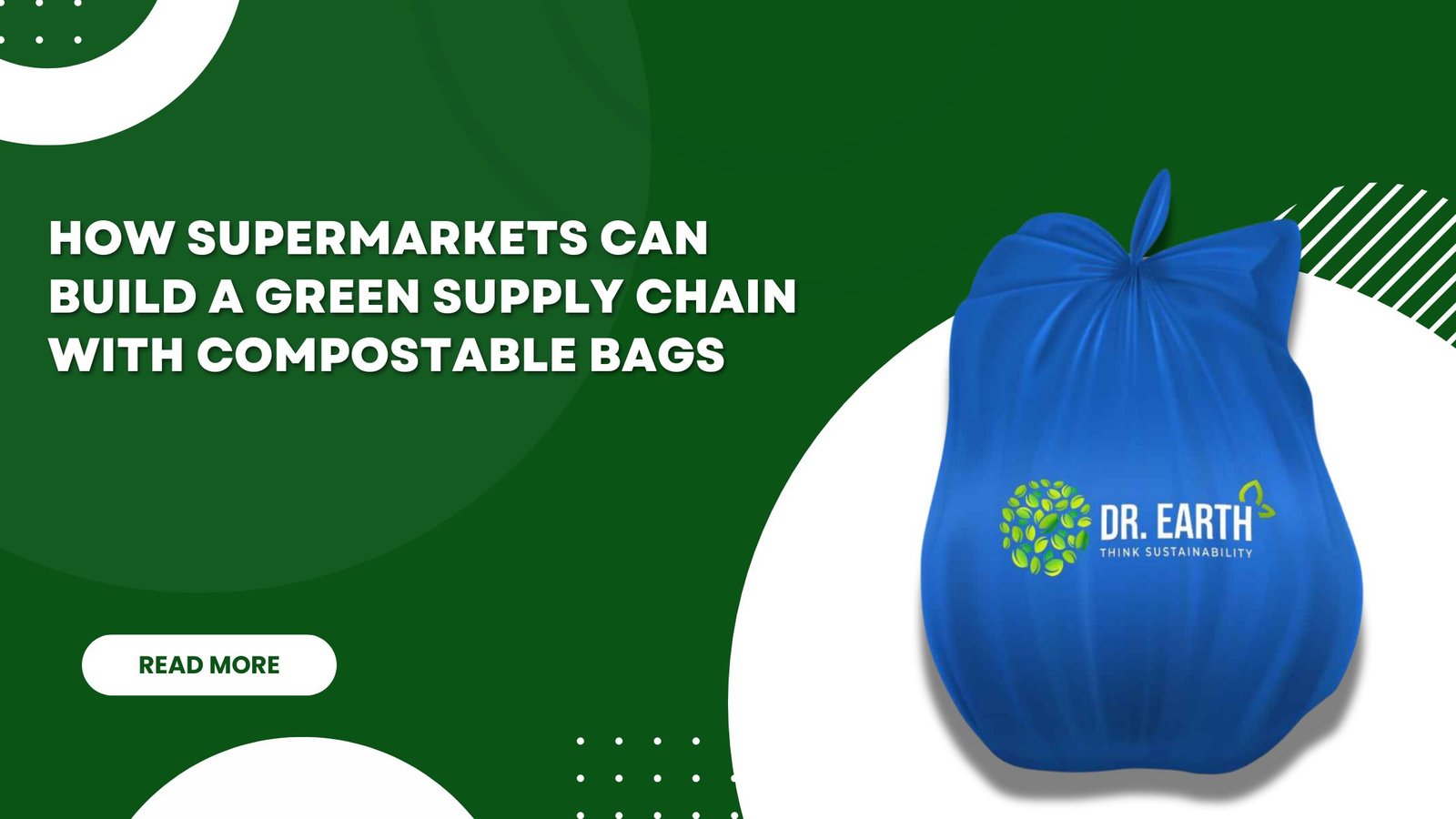
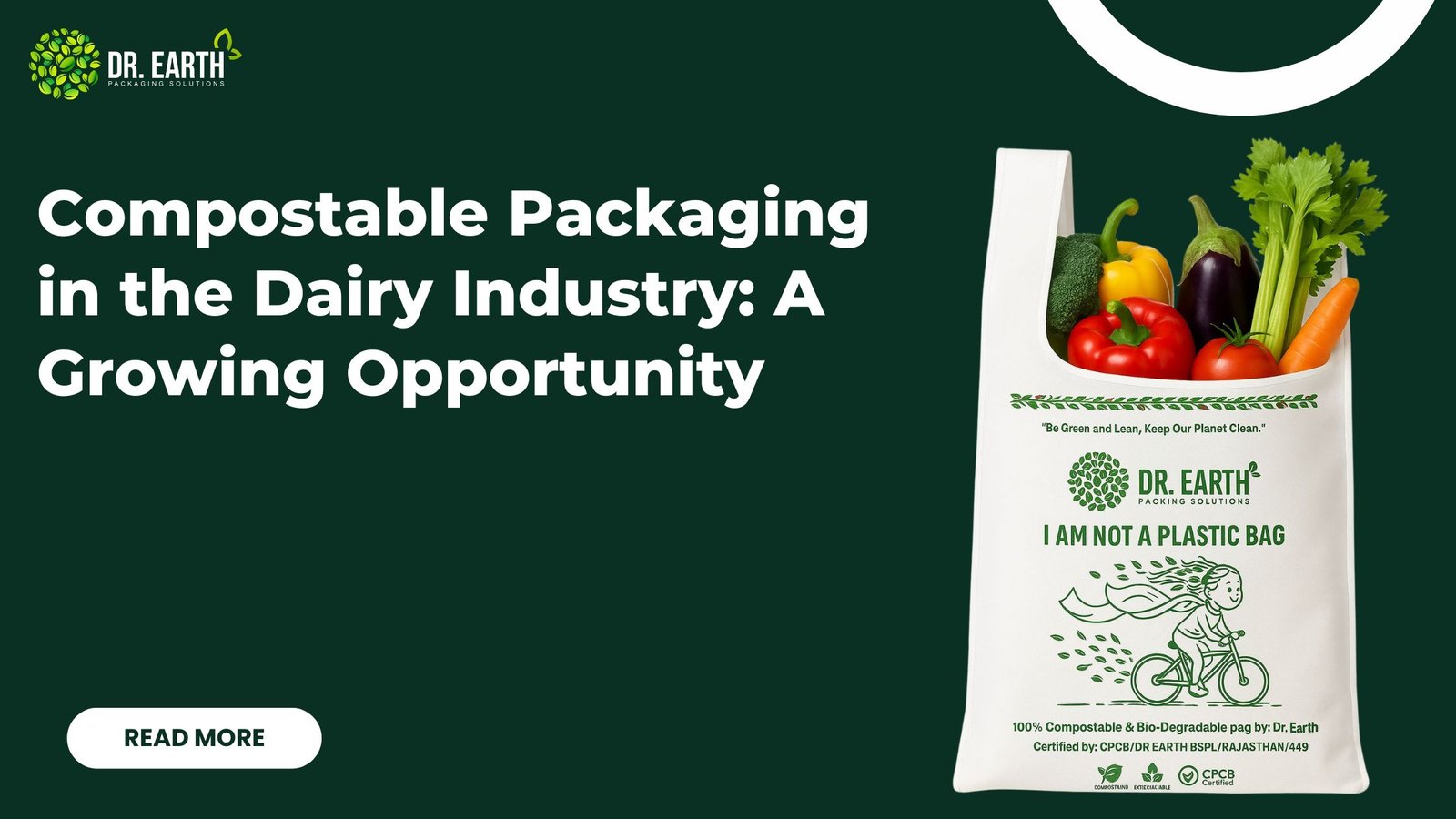
At Dr Earth, compostable bags are built to offer strength and usability while still being environmentally friendly.
The Role of Compostable Bags in a Green Supply Chain
A sustainable supply chain is created step-by-step.
The use of compostable bags helps build an eco-friendly supply chain in several ways.
Reducing Plastic Waste at the Source
The first way that compostable bags contribute to a sustainable supply chain is by reducing the amount of single-use plastic bags that are used.
Each compostable bag that replaces a plastic bag will help reduce the amount of plastic waste that is in the environment.
Calculating How Many Bags Are Needed in These Places Will Produce Significant Waste Reduction
By the thousands, every single day in just a few locations, compostable bags will provide a significant reduction in food waste.
Improving Waste Segregation
Supermarkets are responsible for a significant amount of organic waste due to unused fruit, vegetables, and leftover food items. When waste is collected in plastic bags, it is very difficult to process the organic waste collected. Compostable bags allow the collection of organic waste and processing of the organic waste together, which improves composting effectiveness and lessens the amount of contamination.
This will become increasingly important as cities move toward establishing better waste management systems.
Supporting Circular Economy Practices
A green supply chain is not only about eliminating waste; it also creates cycles. For example, when using compostable bags to collect organic waste:
- Collect organic waste.
- Transport organic waste to composting facilities.
- Convert organic waste into nutrient-rich compost.
- Return nutrient-rich compost to agricultural fields.
Using this process, organic waste turns into a resource (i.e., nutrient-rich compost) and creates a continuous cycle. As supermarkets begin to adopt circular economy/supply chain models, they will move closer to supporting circular economies.
Enhancing Customer Experience and Trust
Sustainability is not just operational — it is emotional.
Customers notice small details.
When a supermarket offers compostable carry bags, it sends a clear message:
“We care about the environment.”
This builds trust.
It also enhances the shopping experience.
Customers feel better about their purchase. They feel aligned with the brand’s values.
Over time, this leads to:
- More loyal customers
- Increased positive word-of-mouth
- Improved brand image
These are significant factors in a highly competitive retail market.
Regulatory Compliance and Future Readiness
Regulations in the Indian plastic industry are growing rapidly, and single-use bans are likely to increase. In light of this, enforcement is getting stricter, and all businesses will need to meet the sustainability compliance expectations.
Supermarkets that rely on plastic as their primary packaging will soon be faced with:
- Compliance obstacles
- Financial penalties
- Major operational changes
Changing to compostable bags will not only keep businesses ahead of upcoming regulations but will also reduce their risk and help them continue to operate efficiently over time.
Operational Efficiency and Practical Benefits
A major misconception about sustainable solutions is that they make operations more complicated than they need to be. However, many of the processes associated with the use of compostable bags can actually make operations easier.
For example, using compostable liners for organic waste eliminates the need to manually sort this material before it goes into the composting facility; the waste can be placed directly in the composting unit.
Bulk purchases of compostable bags will also improve the flow of materials through the supply chain and decrease the frequency of procuring additional product. When implemented correctly, sustainability and efficiency will complement each other.
Addressing Cost Concerns
Cost is a significant concern for supermarkets, and compostable bags have an initial price slightly higher than traditional plastic bags. Keeping only the unit price in mind does not provide a full understanding of the value for businesses.
All supermarkets should consider:
- Their brand’s value in the marketplace
- Their ability to retain customers
- Their ability to comply with environmental regulations
- Their ability to manage the waste produced by their business
After considering these items, the overall return on investment becomes self-evident.
As the demand for compostables increases, and production, by way of economies of scale, continues to be developed, the cost will continue to be a sizeable contributing factor toward supporting sustainable business practices.
Building a Green Supply Chain: Practical Steps
Transitioning to a more sustainable supply chain does not have to be a complicated process for supermarkets. Making small, strategic changes will start the process off.
Some examples of small, strategic changes would include replacing plastic carry bags with certified compostable bags and then gradually transitioning to offering compostable packaging options in produce departments. Staff need to be trained to understand the benefits of using compostable bags and to share that information with customers.
Waste must also be segregated properly in-store at the same time.
It is essential to partner with good suppliers during this process.
At Dr Earth, we are committed to helping businesses during their transition by offering high-quality compostable products that meet the needs of retailers in today’s marketplace.
The Competitive Advantage of Going Green
Sustainability is becoming more and more of a competitive factor in retail.
Supermarkets that adopt green practices early position themselves as leaders.
- They attract conscious consumers.
- They build stronger brand identities.
- They future-proof their operations.
On the other hand, those who postpone making the transition will likely fall behind.
The changeover is occurring now.
The question is not “Should supermarkets convert to using sustainable packaging?” It is simply “How soon?”
The Bigger Picture
While one supermarket alone may not be able to change the world, collectively, thousands of supermarkets can make better choices for packaging solutions.
The area of packaging is a highly visible and significant area where change can occur rapidly by changing to a compostable bag
Final Thoughts
As we’ve outlined, a green supply chain isn’t just a matter of one major transformation.
A green supply chain is a long-term commitment to make sustainable choices at each step of the supply chain.
Compostable bags for groceries are an excellent way to begin reducing a grocery store’s environmental footprint and will create efficiencies in a store’s business as well as improve customer confidence and prepare the grocery industry for the future.
At Dr Earth, we feel that the process of choosing sustainable packaging should not be overly complicated; it must be reliable, accessible, and impactful.
The future of retail will be defined not only by what items are being sold but also by the manner in which they are delivered.
A green supply chain in supermarkets focuses on reducing environmental impact at every stage — from sourcing products to packaging, transportation, and waste management. It includes using sustainable materials like compostable bags to minimize plastic waste.
Compostable bags break down naturally into organic matter, unlike plastic bags that take hundreds of years to decompose. By replacing plastic with compostable alternatives, supermarkets can significantly reduce landfill waste and environmental pollution.
Yes, modern compostable bags are designed to be durable, leak-resistant, and suitable for carrying groceries, fresh produce, and everyday items. When sourced from certified manufacturers, they perform as effectively as traditional plastic bags.
Absolutely. Customers today prefer brands that follow sustainable practices. Using compostable bags shows environmental responsibility, builds trust, and enhances the overall shopping experience, leading to better customer retention.
While the initial cost may be slightly higher than plastic bags, compostable bags offer long-term value through regulatory compliance, improved brand perception, customer loyalty, and reduced environmental impact — making them a smart investment.
Share:
Related Posts
Send Us A Message
Related Posts