Introduction: The Heart of India’s Supply Chain
Wholesale Market/Mandi is the backbone of the Indian economy. Daily, enormous quantities of fruits, vegetables, grains, and goods flow from these markets to retailers and consumers.
They are fast, they are efficient, and they are essential.
However, there is a challenge that, more often than not, goes unnoticed – packaging waste.
The mandis produce an incredible amount of waste every day, from plastic carry bags to thin liners to wrapping materials to whatever else you want to call them.
These products are convenient but will ultimately impact our environment negatively.
At this very moment, we need to act on the following:
Create a more efficient Mandi without further harming our environment.
The Problem: High Volume, High Waste
Mandi’s work at high speed and on a massive scale. Every day, there are thousands of transactions, and during each transaction, there is a need for packaging.
What’s commonly used:
- Thin plastic carry bags.
- Single-use plastic liners
- Temporary wrapping materials.
What happens next:
- Upon completion of the transaction, almost all of the packaging from the above items ends up being disposed of.
- The plastic then gets mixed in with organic waste and begins to build up in the open area or drains.
Over time, this leads to:
- Unhygienic conditions
- Clogged drains
- Increased landfill capacity
The environmental impact is certainly a major issue, but it also creates daily operational issues.
Why Mandis Need Sustainable Packaging Now
Although sustainability is most often associated with malls and the modern retail sector, the reality is that:
👉 Mandis create a much higher level of daily packaging waste than organized retail
Three reasons demonstrate the need for immediate change:
1. Increasing Plastic Regulations
Government policies related to single-use plastics have become much more stringent. It is only a matter of time before mandis have to adapt.
2. Growing Awareness
Mandis are witnesses to how traders, buyers, and consumers are increasingly aware of the impact of excessive waste on the Environment.
3. Operational Challenges
Plastic waste creates a cluttered environment, hygiene issues, and inefficiencies in day-to-day operations within a mandi.
Compostable Packaging: A Practical Solution
Sustainable packaging must meet three criteria in mandis:
- It must be easy to use
- It must be affordable
- It must be suited to bulk operations
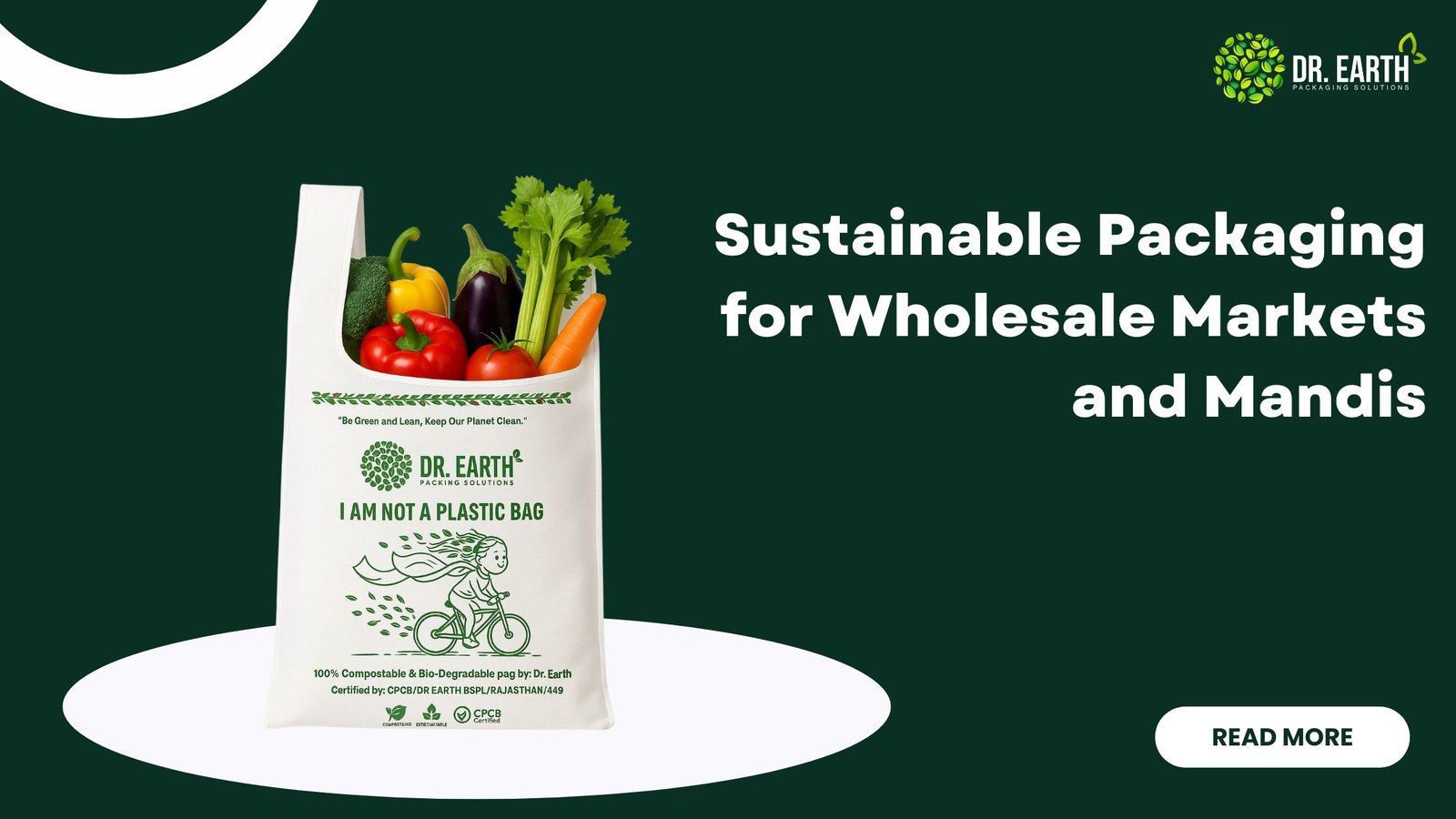
Compostable bags meet all of these three requirements.
What makes them different?
- Composed of plant-based materials
- Bio-degradable
- Do not contribute to microplastics
Unlike plastics, which will not return to the earth, compostable bags will return safely to the earth.
Where Compostable Packaging Can Be Used in Mandis
A complete transition will not result from mandis fundamentally changing the way they operate; rather, it will result from mandis focusing their immediate efforts on the highest volume of plastic usage.
1. Carry Bags for Buyers
Every transaction involves a bag. By switching from a plastic carry bag to a compostable carry bag, an immediate impact can be made.
2. Packaging for Fruits and Vegetables
Bulk fruits and vegetables can be packaged with compostable liners.
3. Waste Collection
Mandis produce a large amount of organic waste. Compostable bags can improve the efficiency of collecting and processing this waste.
Improving Waste Management at the Source
The mixed waste in mandis is a significant problem.
Organic waste and plastic are thrown together, making it challenging to process both effectively.
With plastic:
- Difficult to compost
- Increased effort for waste segregation
With compostable packaging:
- Process organic waste and compostable packaging together
- No need to separate
- Cleaner waste streams
This small change can create a significant improvement in how waste is managed.
Better Hygiene and Working Conditions
The management of waste directly impacts hygiene. Plastic waste lying around creates:
- Unkempt environments
- Obstructed pathways
- Pest-related issues
The move to compostable packaging reduces the accumulation of waste for future generations.
The result:
- Cleaner market spaces
- Better working conditions
- Improved customer experience
In food-related markets, hygiene is especially important.
Cost vs Value: Understanding the Real Picture
A major concern for mandis is cost. Plastic is inexpensive; however, it carries many hidden costs:
- Waste management issues
- Environmental impacts
- Future compliance issues
While there may be a slightly higher initial cost for compostable packaging products, they provide long-term value.
The more businesses advocate for:
- Cleaner processes
- Readiness for regulatory compliance
- Improved perception in the marketplace
The more feasible the transition becomes to be able to implement bulk buying at the mandi level, which will further drive down pricing.
The Role of Collective Adoption
Mandis, by definition, are not managed by one entity.
Thus, the only way to achieve change is through collective action.
How the shift can begin:
- A few of the mandis have begun using compostable bags.
- Other mandis see the benefits.
- Market Associations are supporting the shift.
As time goes by, all mandis will adopt this change.
Even small pilot projects can lead to a larger scope of adoption.
Supporting a Circular Economy
Mandis are linked to farming at the most fundamental level, thus making mandis perfect for circular systems.
With compostable packaging:
- Get collected
- Be turned into compost
- Go back to the farms
This creates a complete cycle:
👉 Farm → Market → Waste → Soil → Farm
Plastic disrupts this Full Cycle. Compostable products facilitate this full cycle.
Why Quality Matters
All Compostable Products Are Not Created Equally. Low Quality May Cause:
- Tearing
- Failing Due to Load
- Resistance from Users
This Is Why Selecting The Right Supplier Is Paramount
At Dr Earth, Our Compostable Bags Were Created For Real-World Conditions: They Are Strong, Dependable, & Functioning In High Use Environments Such As Mandis.
The Opportunity Ahead
Changes Have Always Occurred Within Mandis.
Changes Have Included Digital Payments And Enhancements To Logistics.
The Next Step Is Moving, Making Sustainable Packaging Changes To Their Operations.
This Doesn’t Mean You Need To Change The Whole System Overnight; It Means Putting In Place Progressive Improvements In A Practical & Scalable Manner.
Final Thoughts
Wholesale Markets/Mandis Specifically Are A Fundamental Element Of India’s Supply Chain.
The Economic Impact From These Types Of Businesses Is Significant And They Can Also Be A Catalyst To Implement Change.
By Transitioning To Compostable Packaging, Mandis Can:
- Reduce Their Plastic Waste
- Increase Hygiene
- Enhance Their Waste Management Processes
- Be Prepared For Future Regulations
At Dr Earth, We Believe That Sustainability Is Simple, Practical, And Effective.
Real Change Doesn’t Always Start With Big Systems.
Sometimes, Real Change Begins With Abandoning Plastic For Compostable Products Using A Simple Shift.
Frequently Asked Questions