The Problem We All See… But Don’t Think About
Every city in India has the same silent issue.
- Garbage trucks pass.
- Bins are overflowing.
- Landfills continue to be expanded on the outskirts of every major metropolitan area.
We see it. We look away.
However, behind this everyday occurrence is an even bigger challenge than just creating waste; it is creating a better, more efficient method of disposing of it.
Waste management in the United States has been done by hand at an unorganized level and in a reactive manner for many years. People manually sort their waste. There are predetermined collection routes, instead of collecting based on need. More importantly, waste has been treated as something that needs to be disposed of instead of properly managed.
Now that attitude is beginning to change.
And the force behind this change is not just policy, but technology — specifically Artificial Intelligence.
Waste Is No Longer Just Garbage — It’s Data
The biggest shift happening right now is simple but powerful:
- Waste is no longer just waste. It’s data.
- Today, systems can track how much waste is generated in a specific area, what type of waste dominates, and even at what time it peaks. This kind of insight was impossible a decade ago.
- Artificial Intelligence processes this data and turns it into decisions.
- Instead of guessing, cities and businesses can now respond based on real patterns.
- That changes everything.
Machines That Can Identify Waste Faster Than Humans
One of the hardest parts about managing waste is segregating it.
When wet waste, plastics, and recyclables are mixed, the entire system slows down. Recycling is more difficult, compost becomes contaminated, and landfills are filled quickly.
Artificial Intelligence (AI) is providing a practical solution to this problem.
Modern waste management facilities are now using camera and sensor systems that can both “see” and “identify” waste types. These systems are trained to identify materials using identifiable shapes, textures, and colours. After different types are determined, robotic systems can quickly separate them from one another.
What would have taken hours of manual labour can now be done in minutes. Equally important, it decreases human exposure to
More importantly, it reduces human exposure to unsafe conditions.
Smarter Collection, Not Just Faster Collection
Think of how waste collection is done.
The truck has a set route to collect trash, whether the garbage bin is full or not. So sometimes the truck will stop to collect an empty bin, and sometimes it will miss a full bin.
This method of collecting garbage is inefficient, but it has become the norm in most areas.
What if, instead of guessing when to pick up a garbage bin, the truck used smart bins to tell the truck how much garbage was in it?
Smart bins would be able to tell how full they were by using sensors. They would then send that information in real-time to a centralized system, which would then use artificial intelligence to determine the most efficient route for the truck.
The result is simple:
- Less fuel wasted.
- Less time lost.
- Cleaner streets.
Smart Bins are currently being implemented and tested in some parts of India, especially in the smart city projects.
From Reaction to Prediction
Here’s where AI becomes truly powerful.
It doesn’t just respond — it predicts.
- Over time, systems learn patterns. They understand which areas generate more waste, which days are heavier, and how seasons or festivals affect waste production.
- So instead of reacting after bins overflow, cities can prepare in advance.
- Resources can be allocated before problems arise.
- Waste management becomes proactive.
The Missing Piece: Material Matters
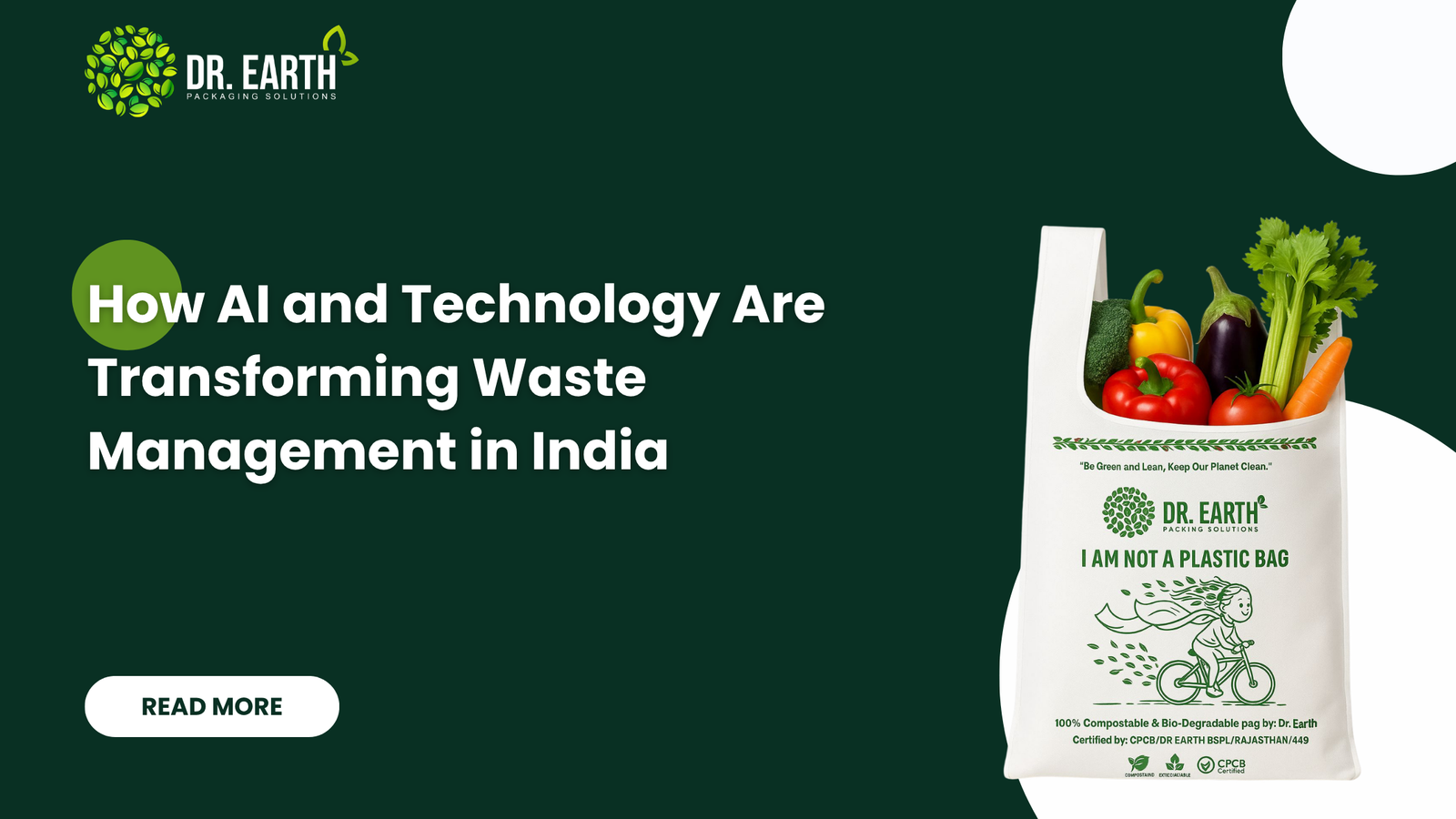
Technology can improve waste management systems, but it can’t do something on its own. The type of material that’s used will play a significant role in how much waste is created. For example, if waste is wrapped in plastic, even the best waste management system will struggle; plastic contaminates organic waste, makes composting much slower, and creates microplastics that remain in our land.
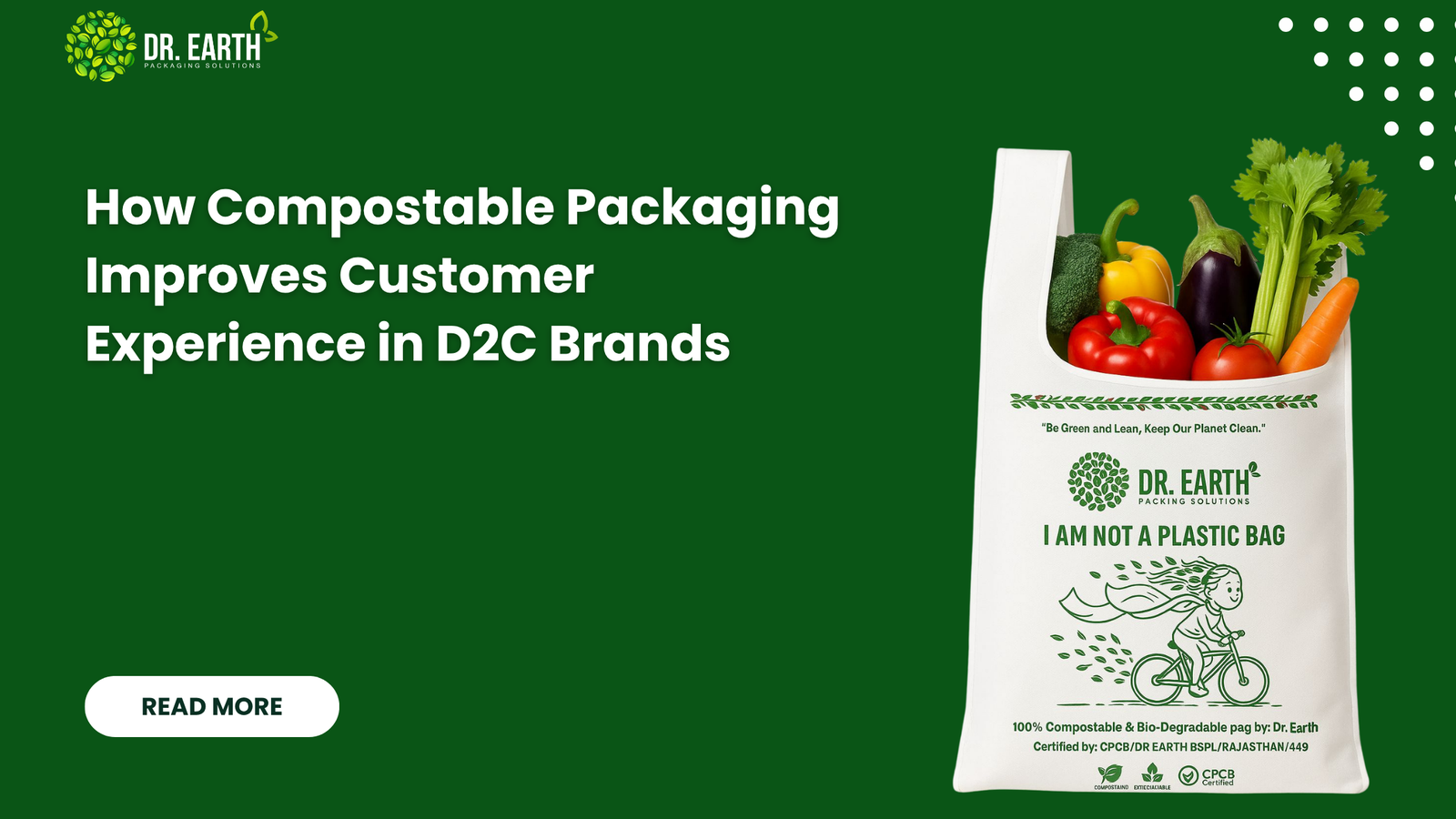
This is why compostable packaging is so important for cities and developing countries. When organic waste is collected in a compostable bag, it becomes a part of the composting system naturally; it does not have to be taken out; there is no long-term waste remaining.
At Dr. Earth, we are focused on creating products that do not interfere with today’s modern waste management systems, but rather, help them. Smart waste management will only work when the inputs used are smart as well.
Recycling is becoming more precise in India; it has always had the opportunity to do so, but it has not.
Recycling Is Becoming More Precise
Potentially, recycling in India has always held promise; however, it has faced challenges related to operational efficiency in recycling operations. Mixed waste and manual sorting adversely affect the quality of recycled materials, reducing the economic viability of recycling operations.
AI-enabled recycling “facilities/centres” are creating positive change in this regard and allow for the use of automated equipment to sort materials with much higher levels of accuracy than was possible with manual sorting. Materials (e.g., plastic, metal, paper, etc.) are quickly identified and separated from each other.
Recycling plants that have implemented automated (AI) sorting equipment are achieving greater overall recovery rates of recyclable materials while also significantly reducing the volume of material sent to landfills.
With improved levels of operational efficiency, recycling becomes a more economically viable solution to waste management (disposal).
Transparency Is Becoming the New Standard
A second area of significant industry transformation has been the implementation of digital data management systems for tracking waste along the value chain. Previously, once waste left the residential or commercial premises (property) where it is generated, little to no information about the disposition (to an end-destination) of the waste would be known.
Through the use of digital systems that allow for tracking the entire waste value chain, businesses can track how much waste they generate, how it is processed, and whether it is recycled or composted post-processing. The tracking of waste generated, its processing methods, and the mode of completion of the waste’s life cycle are vitally important for businesses that have a strong focus on pursuing ESG goals (Environmental, Social, and Governance).
Establishing a culture of transparency will create a culture of accountability and ultimately lead to the improvement of waste management and recycling practices.
Startups Are Accelerating the Change
Many new businesses are in India, creating products and services to help with:
- Tracking waste
- Recycling our waste better
- Using the circular economy model
- Using AI/technology to automatically sort waste
Startups are making the waste sector more responsive and transparent by introducing new technologies and processes to an industry that used to be slow.
They also help develop advanced waste solutions that are affordable and easy to access.
The Roadblocks Are Real
There are many things that have progressed but they still have many challenges ahead.
They require investments in technology. Development of infrastructure is ongoing. There is still not a broad awareness of what this means, and there is still a great deal of infrastructure developed based on traditional systems around the globe.
AI is not going to fix everything at once.
However, they are creating a solid base for change.
It may take some time before a transition takes place. Yet, they are continuing to move in the right direction.
The Bigger Picture: A Smarter Future
India’s waste management is in the next step of a new phase.
It is no longer just about collection and disposal; it is about efficiency, intelligence, and sustainability.
In the next few years, individuals will use smart waste systems in more cities, businesses will align their business practices with sustainable ways, and there will be increased integration of technology and materials.
Most importantly, we will see reduced dependence on landfills as a long-term solution for waste.
Final Thoughts
The future of waste management in India will be smarter and more efficient than it is today.
Technology/AI will revolutionising how we will be able to identify, collect, process, and monitor our waste. Making a traditionally chaotic system into a system that is structured and more efficient.
While technology is very important to this process, there is much more to it than just using technology.
To get to a more efficient waste management system, we need to make sure that we make responsible decisions regarding the materials that we generate and the products that we use daily.
One of the responsible decisions we can make in regard to our materials is to use compostable packaging.
At Dr. Earth, we believe that the real solution lies in combining innovation with responsibility. When smart technology meets sustainable materials, we move closer to a system where waste is not just managed — but minimized.
Because the goal is not just to handle waste better.
The goal is to create less of it in the first place.