Building Sustainable Fashion Without Compromising Experience
The Fashion Industry’s Growing Packaging Problem
As the fashion industry continues to shift and expand, traditional ways of selling clothing have changed drastically. Advances in technology have led to a significant increase in direct-to-consumer and online retailing, which has opened up new choices for consumers.
However, the rapid expansion of online retail has created an unrecognized environmental issue. In most cases, multiple layers of plastic packaging are used for each clothing order. This can include an outer courier bag and a poly bag (or sometimes more than one) to protect the clothing. A use of materials is given for a short period of hours to weeks, but their effect on the environment is ongoing, lasting up to 4-6 decades (or more).
Most manufacturers/manufacturers create packaging out of conventional materials (i.e., plastics), but there are options available for using reusable packaging (i.e., bags) after initial use; however, “plastic” is still an issue and should still be considered.
As fashion brands become larger, the amount of waste created from packaging is growing at alarming rates; as a result, it is important that fashion brands start to rethink how they design their packaging.
Changing Consumer Expectations
Today’s society is much more informed about its purchasing habits than before. This means that when consumers are shopping for a new outfit, they are interested in more than just the style, price, or quality of the clothes; they want to understand how brands operate. Sustainability’s impact on a consumer’s purchasing decisions has changed significantly.
A consumer receiving a product in wasteful amounts of plastic packaging leaves them with a negative perception of that brand and suggests that the brand likely does not care about the environment. Alternatively, consumers believe they can trust brands that have taken the time to create packaging that is both well thought out and sustainable.
This generation’s mindset has shifted considerably and is very much about supporting relatable brands; therefore, younger generations are much more inclined to support brands they feel have a sense of social and environmental responsibility.
There is an excellent chance for clothing companies to take advantage of the changes in consumer behavior.
Why Packaging Matters in Fashion
Packaging is usually the first physical interaction a consumer has with a brand. It marks the moment when their online shopping experience becomes a physical manifestation of that brand from their computer or mobile device.
The aesthetics, texture, and quality of a package can affect how a customer perceives your brand.
If packaging is made from materials that are either wasteful or of low quality, this could lower the perceived value of the product. Quality, sustainable packaging will enhance the customer’s complete shopping experience.
Compostable Packaging: A Practical Solution
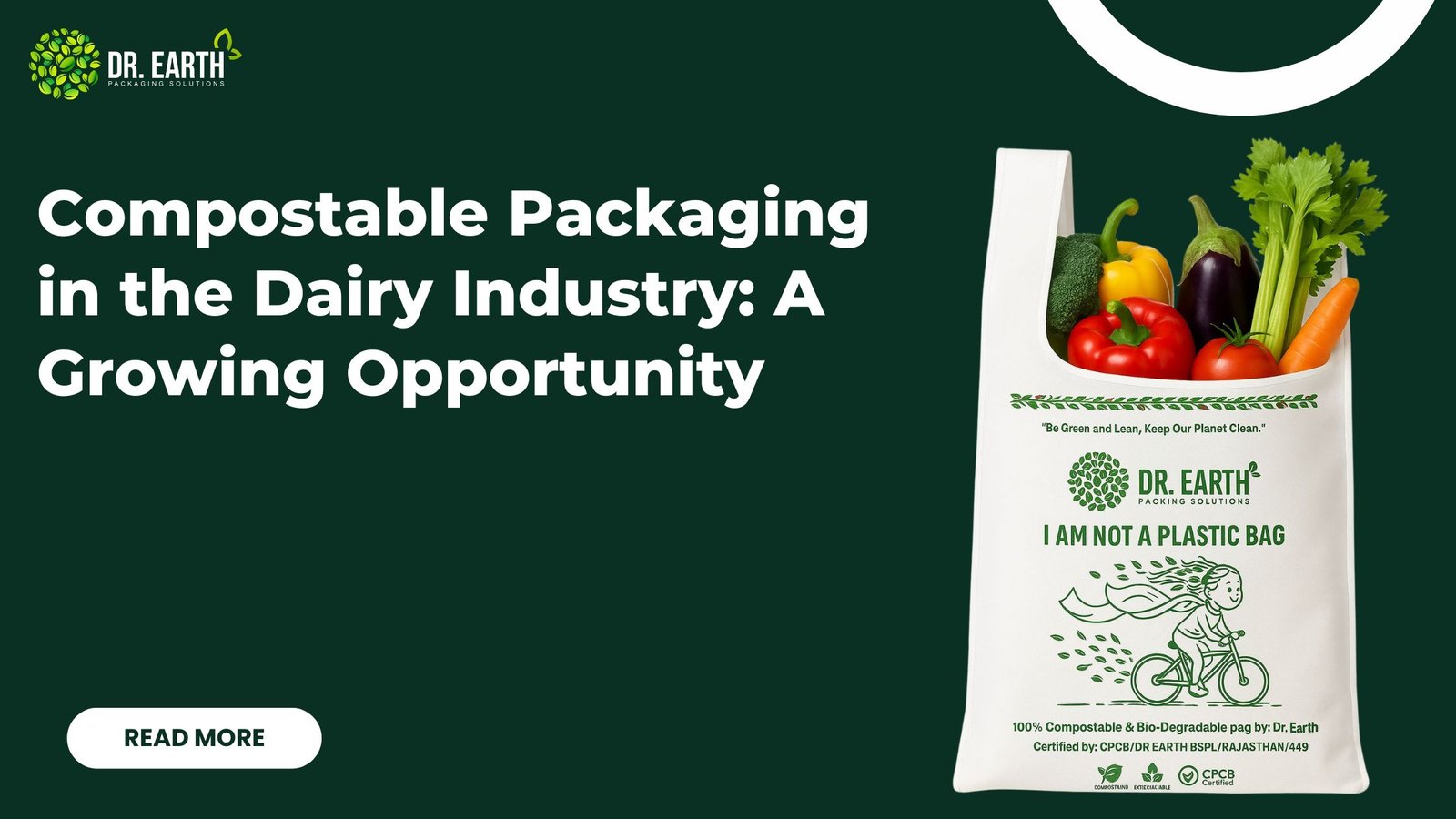
Compostable material comes from plants and is designed to decompose into natural materials when conditions are appropriate. Unlike conventional plastic materials, compostable options will not exist in the environment for hundreds of years.
Compostable bags also perform similarly to traditional plastic in terms of the functional qualities of strength, flexibility, and providing products with protection during transit. In fashion supply chain applications, compostable bags can provide a variety of choices: courier bags, inner garment packaging, and retail carryout bags, to name a few.
At Dr Earth, we develop compostable packaging solutions to support and meet the needs of real-world businesses while also promoting environmental sustainability.
Key Areas Where Clothing Brands Can Reduce Plastic Waste
Brands don’t have to drastically change how they do things to decrease plastic waste. Small, specific improvements in crucial areas can lead to immediate and sizable reductions in plastic waste.
The most impactful area to start is by substituting plastic bags used for shipping orders with compostable bags. Brands use these bags for each order shipment, and therefore, contribute a very large amount of waste through shipping bags; changing to compostable shipping bags will lead to an immediate reduction in plastic waste.
Also, many brands use plastic polybags to keep their garments free from dust and moisture. Compostable alternatives serve the same purpose as the traditional plastic polybag while not adversely affecting the environment.
Clothing brands may want to replace plastic retail carryout bags with compostable bags in their brick-and-mortar and ecommerce stores; if all the carryout bags are compostable, this would create a seamless experience for customers who buy clothing at the store and order online.
Even small changes made at scale can create a significant difference.
Strengthening Brand Image and Customer Loyalty
Sustainability is not only an area of “corporate responsibility”, but also a brand’s asset now.
By implementing compostable packaging, clothing brands demonstrate their commitment to sustainability and position themselves as forward-thinking and responsible; by doing this, they will enhance their brand integrity and foster strong, long-term customer relationships.
Customers have a greater level of trust in brands that are making visible efforts to operate sustainably. Furthermore, customers are more likely to share their positive experience with both online and offline venues.
This type of grassroots marketing can create substantial value.
Aligning with Regulatory Trends
Many governments across the globe, including India, are implementing measures focused on reducing the environmental impact of plastic waste. Increasingly stringent requirements for single-use plastics will be enforced upon businesses; therefore, clothing businesses need to be prepared to comply with these new regulations.
Continuing to use traditional plastic packaging may result in long-term problems for clothing brands.
By utilizing compostable packaging now, businesses can remain ahead of the curve concerning regulatory changes, mitigate potential regulatory penalties, and support the long-term success of their operations.
In addition to mitigating regulatory risks, adopting compostable packaging positions brands as positive influencers and leaders versus followers in the area of sustainability.
Addressing Cost Considerations
Manufacturers of clothing are often concerned with the costs of using compostable packaging.
Although it is true that compostable packaging materials are generally more expensive than low-grade plastics in the initial purchase cost, it is important to consider additional factors.
Sustainable packaging contributes to a company’s brand value, drives customer loyalty, and supports the long-term growth of a business. The use of compostable packaging also provides a business with protection against compliance issues and enhances the business’s market position.
As demand for compostable products rises and increases the volume of product produced via compostable processes, the price of compostable packaging will become increasingly competitive.
Therefore, compostable packaging should be viewed as a long-term investment, as opposed to a short-term expense.
Operational Ease and Scalability
Transitioning from plastic to compostable packaging is a relatively simple operation.
Most compostable bags are designed to fit into existing packaging processes without any additional training or infrastructure.
This makes it a feasible option for companies of all sizes, including small D2C businesses as well as large retail chains.
Having the right supplier allows companies to ensure consistency in both quality and supply and will therefore help them to continue scaling sustainable operations.
The Bigger Impact of Small Changes
Some might underestimate how impactful a package can be.
A single package may seem too small to count as an influence, but when multiplied by thousands or millions of orders, it creates an aggregate influence.
Replacing plastic with compostable packaging can significantly lower the level of plastic that clothing companies put into the environment.
This will help make our cities cleaner, relieve pressures on landfills and lead to healthier ecosystems.
More importantly, it will serve as an example for other industries.
Final Thoughts
The fashion industry has always been about change and innovation.
These changes must innovate beyond just design and current fashions and also include issues related to sustainability.
Compostable packaging provides a way for companies that sell clothing to replace their plastic with a more sustainable option without sacrificing the quality of their product or the experience to their customers. This allows clothes companies to be more aligned in their operational methods with their purpose.
It aligns business growth with environmental responsibility.
At Dr Earth, we believe that the future of packaging lies in solutions that are not only effective but also responsible.
Because fashion should not just look good — it should do good.
Frequently Asked Questions